"When we remember that we are all mad, the mysteries disappear and life stands explained." Twain / "I write to keep from going mad from the contradictions I find among mankind - and to work some of these contradictions out for myself." Montaigne / "I write because I have found no other means of getting rid of my thoughts." Nietzsche / "Writing is an integral part of the process of understanding." Arendt / "Writing, to me, is simply thinking through my fingers." Asimov.
We need external organizations to monitor for safety without any conflicts of interest! And we need to stop throwing people into dangerous situations as if human beings are expendable, expecting more and more to be available to fill their spot like it's flippin' D-Day!!
Social psychologist, Dr. J. Offir, wrote a great thread on how hard it would be for Olympic competitors to not jump in the Seine despite how sick it was obviously making them:
This was obviously a policy failure that we watched unfold in real time. ("Wait! Stop! Come back!" says Willie Wonka.) But it also demonstrates how people selectively trust authority figures when those leaders are saying what we want to hear. (This pattern of behavior has also been on clear display during the pandemic: people were suspicious of leaders whom they perceived as restricting freedoms, due to psychological reactance, but once those experts said to unmask and go to the mall,
the same folks who had been disbelieving suddenly found faith in authorities' messages again. Ask people why they aren’t masking, and many will give you some variation on "the CDC said I don't need to.")
A few decades ago I watched a video in a class about a Black female musician answering the question how to stop all the racism and sexism in songs at a time when Eminem was using the "N" word liberally.
She said she doesn't waste her efforts on stopping others: "I just make sure to put something else out there in the airwaves." That quote is from memory and likely pretty accurate. I can't find that specific interview, but I was able to coax out the details from my brain with google's help: the band is Sweet Honey in the Rock, and the woman in the video was Bernice Johnson Reagon. I was looking for the "Messages of Hate" portion of Bill Moyer's interview with her, but it costs $100 to access on a page titled "The Songs are Free"! Oh, the irony!
The course was with Dr. Carol Duncan, in her first year teaching there, and it's one of those courses that has stayed with me forever. It was also where I learned about The History of Mary Prince, and tried to use it as a reading in my history class but was dissuaded from talking about the Black experience as a white woman. So it went untaught by anybody.
As I was leaving her classroom after watching that powerful video, another professor in the program stopped to chat with me. He motioned to Dr. Duncan, a Black woman, and said, "Too bad she wasn't in a wheelchair or we'd get a three for one!"
Unbelievable.
Recent to this time, in 1995, the Employment Equity Act had just been amended and strengthened. That type of comment was the pushback.
The racist and sexist messaging is everywhere. And we can't chase it all down. We have to just keep putting something else out there. It's pretty much what Tolstoy was on about.
I can't fight all the messaging that says climate change is going to benefit us or that Covid is mild or just a cold. There is no end to that nonsense. It would use up all my energy to try to combat it, and it would also have very little effect. So instead, I just keep trying to put something else out there. And I find and highlight the good stuff that other people are putting out there too, like these:
Back in the 80s, there was a very funny show about a detective agency, Moonlighting. It was a take on the classic enemies-to-lovers trope with a very prim and efficient Maddie Hayes up against the fly-by-the-seat-of-his-pants David Addison. Of course the two fall in love. In one episode, before having sex - I think for the first time - they have a brief conversation about condoms!!! It was unheard of! We had been taught to use safer sex and were all told to use condoms. It was the beginning of the AIDS epidemic, but other STIs were also pretty common. Yet nobody had shown us what it looked like to actually talk about condoms without killing the mood. If these two very beautiful people can make it sexy, then maybe we could too.
Imagine if sitcom characters wore a mask whenever leaving the house?
I mean, we know that the film industry is one of the most Covid-conscious industries out there, often with everyone on the set masked to protect the stars. They know the value of their well-paid employees who are essentially irreplaceable. The problem with so many other industries is that they see their staff (and clients and patients and students) as entirely replaceable.
Imagine the madcap antics that could happen with characters trying to date. Maybe a funny female lead falls in love with a guy who, once unmasked, has horrible teeth. Fleabag did something similar but with a newspaper hiding a buck-toothed smile instead of a mask. Or imagine two people going on a date - to a movie with no popcorn - and then an awkward hug at the end of the night because neither are quite sure if they want to bring the other into their inner circle of unmasked people! It's really complicated out there for the Covid-conscious, and that could spur lots of funny scenarios. The older sickly grandma who doesn't believe all the Covid malarky and keeps getting sick could be the new stand-in for the shockingly racist grandma of the past.
Sitcoms are full of tropes that we can relate to, but they get less and less relatable when they're all living like it's still 2018. It's nice to watch a fantasy world from time to time, but we look to the arts to see how to live with our current situation. Since political leaders have deserted us, we need more writers guiding us through this mess!
It's a tragedy we're living through, definitely but that often makes for some of the best comedy, and we either have to laugh or cry at the state of things today.
Will re-branding Covid help people start acting to protect themselves from it?
Maybe we need an ad campaign to kick-start public health. Outside of judicial rulings and before marketing, we had religious leaders to remind us to the best ways to survive, and before that we had stories passed down for generations to help keep children safe from harm by altering their behaviour, like this one:
"Our parents told us that if we went out without a hat, the northern lights are going to take your head off and use it as a soccer ball. We used to be so scared!"
Unfortunately, those types of stories are unlikely to work on media-savvy kids today. They also seem immune to stories about going out without a mask, and being cautioned that the invisible microbes are going to infect your brain and body until you can't get out of bed anymore. They're not scared at all.
If kind, other-centred behaviour isn't entirely natural to us, then should it be legislated (more than it already is)?
Many old timey philosophers agree that happiness is predicated on an increase in pleasure and decrease in pain, and that just seem like common sense. Yet all too often the choices we make don’t lead towards our intended outcome of increased pleasure; instead, we make choices that lead us towards misery. We want a clean world, but we drive everywhere. We want a strong uptown core, but we don’t stop shopping at Wal-Mart. We want civilization to continue with beautiful nature to hike in and plentiful conveniences, but we're definitely not about to stop using fossil fuels or eating beef.
Plato might say our problem is that we don’t have the skill of measurement, and he'd call for better education. Epicurus called the same thing a lack of prudence, and he ditched the city to live in a garden with a careful selection of friends. And B.F. Skinner would agree that our immediate reinforcers or punishers seem much larger than distant rewards and punishments. It all boils down to a society full of people making poor choices. Most of us. There are some people who measure well because they seem to just care more about making wise decisions while the rest can’t be bothered to worry about long-term consequences. I think what makes the difference between those that measure well and those that don’t isn’t so much a skill they learned, but a personal disposition they inherited.
Which mean it's a fools errand to try to teach it.
Psychoanalyst Sally Weintrobe coined the term "culture of uncare" to explain intentional efforts to sever links from one another and from the environment.
She calls it "severing links," but the word that comes to mind is alienation. We've been alienated from our environment, from our work, from others, and from ourselves. The neoliberal capitalist system has been far too successful at breaking us away from our own sense of integrity, of wholeness, as it works to turns us into unquestioning cogs in the machine.
This manufactured uncaring, the loss of a capacity to care, is at the heart of why we can't actually do anything about climate change, or covid, or all the horrific conflicts going on right this minute. Marx predicted that capitalism would naturally, eventually, self-destruct as inequity got too extreme for people to accept. But that was before (just before) we understood that burning fossil fuels could have a profound effect on the stability of our ecosystems. Marx wrote about alienation in 1855, and John Tyndall started looking at how carbon dioxide concentrations change the climate in 1859. Now we're frozen in place, watching industry continue to expand while the world literally burns. We won't make it to the glorious end of capitalism.
One of my favourite short stories is Tolstoy's "The Godson." It's the story I revisit whenever I find myself thinking that this whole world has turned a very wrong corner.
I've changed a few details to make this super-abridged version make sense, taking out all the hows and whys of it all. Spoilers!
A boy wants to meet his godfather, so sets off on the journey and sees five specific events along the way that he later realizes are pivotal lessons about the nature of evil and what we should be doing with it:
1. A log is hanging in a tree, and a bear swats it away to get to some honey below. The log swings back and hits the bear, who then hits the log harder, and then, of course, it hits the bear even harder as it swings back. We can't meet violence with violence or it just keeps swinging back to us in equal measure.
Changing minds on big issues takes a long time and the work never ends.
Anti-drinking and driving groups appeared in the early 1980s, like MADD, typically made up of survivors or relatives of victims who saw first hand that something must be done to prevent so many disabilities and deaths. I was a teenager at the time, and my circle didn't think twice about driving hammered. I remember people saying things like these boring old ladies should get a life and stop telling us when we can and can't drive! We were all pretty sure we could drive just fine after a few. Who are they to tell us otherwise? Breathalizer legislation was on the books in the 60s, and RIDE programs were legal in the 70s, but it wasn't until MADD came about that we got flooded with school visits and PSAs and then really strict penalties were enacted for drunk driving including jail time! And they we all sobered up about it, realizing our inconvenience in staying the night or going back to get the car in the morning doesn't really warrant potentially taking a life.
Wheelchair ramps weren't an architectural requirement in public buildings until the 90s, but only after people with disabilities and allies fought for their rights to fully participate in society over decades, starting with Judy Heumann's winning lawsuit in 1970 against the NY Board of Ed that was preventing her equal access to the workplace because she uses a wheelchair. That was following by blocking traffic that got a weak bill passed, and then sit-ins that eventually forced politicians to listen and act. Check out Crip Camp, where activist Denise Jacobson said, "You can pass a law, but until you change society's attitude, that law won't mean much." And now we generally agree that everyone should have access to participate fully in society despite any form of disability. Right???
Early AIDS activists watched friends and loved ones die for years before they could get enough of an audience to have an effect on policy. "Sickness and death from HIV/AIDS was brought to a virtual standstill in the USA . . . by a vigorous public health campaign designed not around treating those who became infected, but by preventing infection in the first place." But it took years of activism, from 1979 to 1986, and many celebrities dying and children dying before public health started to issue PSAs, to actually teach the nation how to prevent the spread.
It takes a really long time to convince governments to impose safety measures that, in some way, affect people's freedom to do their own thing. It's not necessarily a bad thing on its own. to be careful about legislation, but it's very frustrating to be living during the activism phase watching so many children get sick. We've got children dying of Covid already. And lots of celebrities. But there's a huge coverup or spin or denial that has people claiming that, for instance, a fatal heart-attack at 13, 17, 27, and 44, all within a day of each other, is totally normal now. When my healthy friend succumbed to a heart attack in his early 60s, people were so fast to say that people die of heart attacks in their 60s all the time!! Instead of, you know, sorry for your loss. It's all ABC: Anything but Covid.
Like the political/media machine convinced citizens that invading Iraq was necessary, we're being convinced to spread a virus that will come back to destroy our own lives.
Yesterday, Arijit Chakravarty, who specializes in applying mathematical modeling to drug discovery and development, and Martha Lincoln, assistant professor of cultural and medical anthropology, wrote about the ongoing existence of Covid that's often matched with ongoing minimization of a deadly and disabling disease in the US. Politicians are very worried about peoplepanicking and freaking out and being hysterical! They largely don't seem concerned at all with people succumbing to disease repeatedly or tragically, and they really should be:
"If there's one thing we've learned, three and a half years into the current crisis, it's that--contrary to what the movies taught us--pandemics don't automatically spawn terror-stricken stampedes in the street. Media and public health coverage have a strong hand in shaping public response and can--under the wrong circumstances--promote indifference, incaution, and even apathy. A very visible example of this was the sharp drop in the number of people masking after the CDC revised its guidelines in 2021, recommending that masking was not necessary for the vaccinated (from 90% in May to 53% in September). As that example suggests, emphasizing the message 'don't panic' puts the cart before the horse unless tangible measures are being taken to prevent panic-worthy outcomes. . . .
This 'moral calm'--a sort of manufactured consent--impedes risk mitigation by promoting the underestimation of a threat. Soothing public messaging during disasters can often lead to an increased death toll. Tragically, false reassurance contributed to mortality in both the attacks on the World Trade Center and the sinking of the Titanic. . . .Some experts and public figures have uncritically advanced the idea that if the public appears to be tired, bored, or noncompliant with public health measures, then the pandemic must be over. But pandemics are impervious to ratings. . . . History is replete with examples of pandemics that blazed for decades, sometimes smoldering for years befoer flaring up again into catastrophe. . . . A pandemic cannot tell when the news cycle has moved on. . . .
There's a new type of minimizer article out about climate change: concern with it indicates a mental health disorder! It's the same tactic people use to get the public to ignore the ongoing Covid virus.
And then there's the learn to live with it claim that we need to get used to the heat despite people in Arizona are getting third-degree burns from touching pavement and others dying from heat. They obviously didn't learn to prepare their body for the heat.
Either did the cacti:
Climate activist and NASA scientist Peter Kalmus and author Rebecca Solnit both wrote about climate in The Guardian in back to back pieces with very different messages.
Kalmus, who once chained himself to the JP Morgan Chase building in L.A., takes the more urgent tone,
"We've passed into a ferocious new phase of global heating with much worse to come. Biden must declare a climate emergency. I'm terrified by what's being done to our planet. I'm also fighting to stop it. You, too, should be afraid while also taking the strongest action you can take. . . . So long as we burn fossil fuels, far, far worse is on the way; and I take zero satisfaction in knowing that this will be proven right. . . . Fossil fuels are causing this damage. Therefore, the only way out of this heat nightmare is to end them. No amount of tree planting, recycling, carbon offsetting, or wishful carbon-capture thinking will ever change this. . . . Every speck of fossil fuel sold and burnt combusts into carbon dioxide, forcing the planet to heat. . . .
A.R. Moxon wrote about an interaction with an old friend, he calls Stove Minivan, who became a MAGA guy. At first Moxon tried to explain reality to him, but soon became frustrated:
"Minivan was not somebody whose intentions could be trusted. He was not operating in good faith, and I believe he well knew it, because many of his favorite sources of information have written instruction books on how to engage with people in bad faith.
Minivan was not debating; he was using debate to inject his counterfactual beliefs into the discourse, which were designed to further marginalize already marginalized people while simultaneously cloaking himself in self-exonerating grievance.
More, he was exerting an active effort to not know things that could be easily known, and to demand to be convinced out of deliberate ignorance, not because he was interested in having his ideas challenged, but because he demanded a world in which he got to decide what was real.
Further still: Minivan learned from me. The effect of telling him he was using one or another logical fallacy was not to sharpen his reasoning, but to teach him about the existence of logical fallacies, which let him (incorrectly) accuse others of those same logical fallacies.
So Minivan was deploying the language of logic in ways that betrayed a total lack of understanding about what those fallacies were, granted, but in ways that likely made him seem more knowledgeable and reasonable to a casual or sympathetic observer.
He learned to ape our phrases and arguments, in much the way he’d learned to ape the style of Alex Jones and all the various Breitbart and Newsmax contributors he used to inform himself."
And then Moxon tried to understand Minivan's trajectory and that of enough people to actually vote Trump into office (and Ford and all the other conservative premiers here). The rise of the far right is daunting:
"Stove Minivan, it turns out, wasn't some weird outlier.
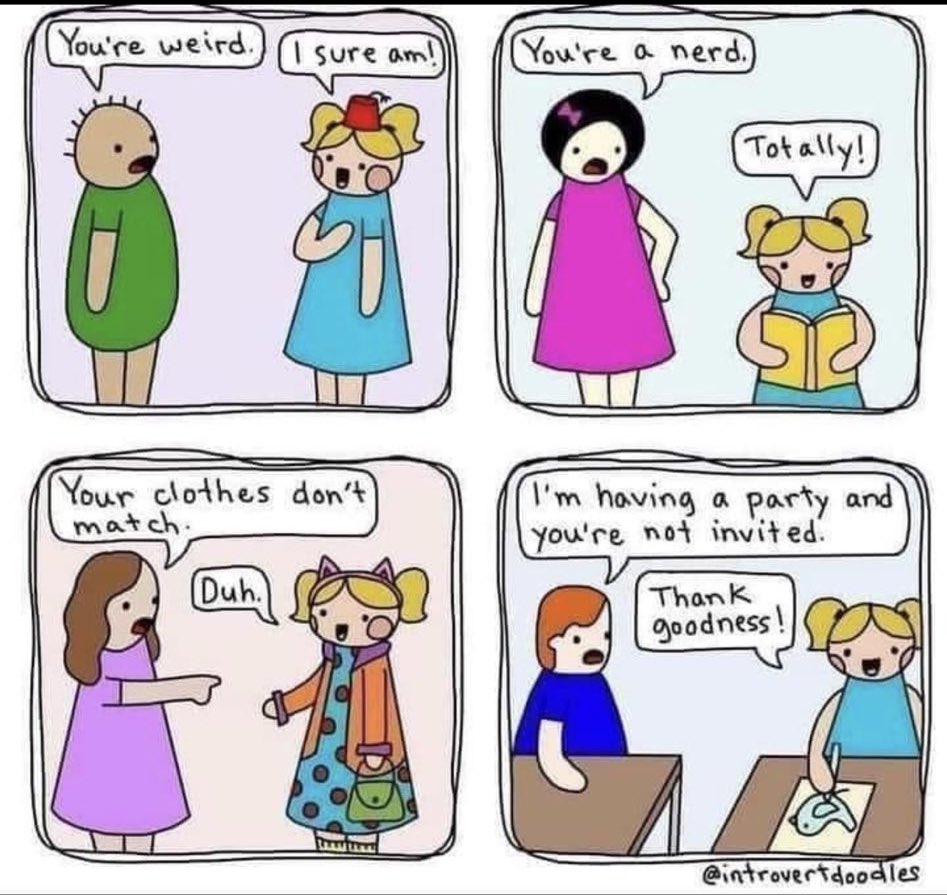
This image comes from a century ago, of course. It's still very hard to be different, but sometimes it's vital.
When I taught a course called the Challenge of Change, I offered up a number of challenges along the way. Students who were uncomfortable participating in any of them were allowed the alternative option of writing a brief paragraph explaining their reluctance. Some took that option, but most participated.
The first challenge came with our discussion of the differences between Functionalism and Conflict Theory perspectives, one leaning towards maintaining the status quo to avoid anomie which can lead to an increase in suicides; the other critiquing that theory as a way to perpetuate a system that benefits those at the top of the status hierarchy. We brainstorm current norms that are beneficial, neutral, or harmful. That list always included some still-too-rigid gender binary norms including, "Guys have to pay for dinner." Then I ask them to break a norm that doesn't benefit anyone in any way, maybe one that actually harms us or holds us back from being our most authentic selves!
The why: Often it's perfectly fine to blindly follow social norms, but sometimes, every once in a while, it can permit atrocities to happen: from cruel conspiracies against that one person in your friend group that's a little different to genocidal actions to nuclear war! So it's absolutely vital to be able to think about the norms we follow and, from time to time, to break the less useful ones just to make sure we still can. We need to practice non-conformity to make sure we can do it if we need to, and it's always wise to take a minute to think, "Do I really agree with this?" before acting.
I've been basically practicing for this my whole life in an army jacket and hippie dresses. So is anyone punk or with purple hair, etc. Although the challenge is to do something out of the ordinary for you, which might mean the goth kids shows up with very mainstream hair for a day.
Saving another thread from twitter, this time it's a really short one from Dr. Lisa Iannattone:
"I'm a little confused at the 'making people feel bad about how their choices harm others is bad advocacy' takes. Didn’t we do that with smoking? Wasn’t the 'secondhand smoke kills' education campaign exactly that? Isn’t 'if you drive drunk you could kill someone' exactly that? Since when is it controversial to point out how our choices could harm other people? Some people seem to think advocacy should never make anyone feel uncomfortable… Do they really not realize that they’re out here shaming the oppressed for making their oppressors feel bad? We’ve created a system of structural violence against the immunocompromised, disabled, and clinically vulnerable. One that now extends to healthcare. We deserve to feel ashamed about it and we should always feel uncomfortable with perpetuating structural violence against others. . . . It's worthwhile to make people aware of the harm. Politicians will not enact change if they think it would be unpopular. So it's absolutely necessary to make everyday people want things to change for the better to have any hope of convincing the deciders to budge.
I've written of the comparison with Covid and drunk driving and/or smoking a few times (list at the end). We'd never insist that getting lung cancer or getting hit by a car is everyone's individual responsibility. We understood collective action then, so why not now? We were able to ban indoor smoking once people understood the science of how second-hand smoke harms other people (and once a restaurant was successfully sued for a waitress's emphysema). You'd think we could all make the minimal adjustment necessary to grasp that exhaling a harmful virus, which we might have right now without any symptoms, is really harmful to other people in the room, so we should all wear a mask just in case. You'd think!
I think masks separate us like the families in Tolstoy's famous opening line of Anna Karenina. You know the one: "Happy families are all alike; every unhappy family is unhappy in its own way." Everyone I've met who wears a mask does it for more or less the same reasons: to protect themselves and others from a virus. But there appears to be a wide variety of reasons people won't wear a mask.
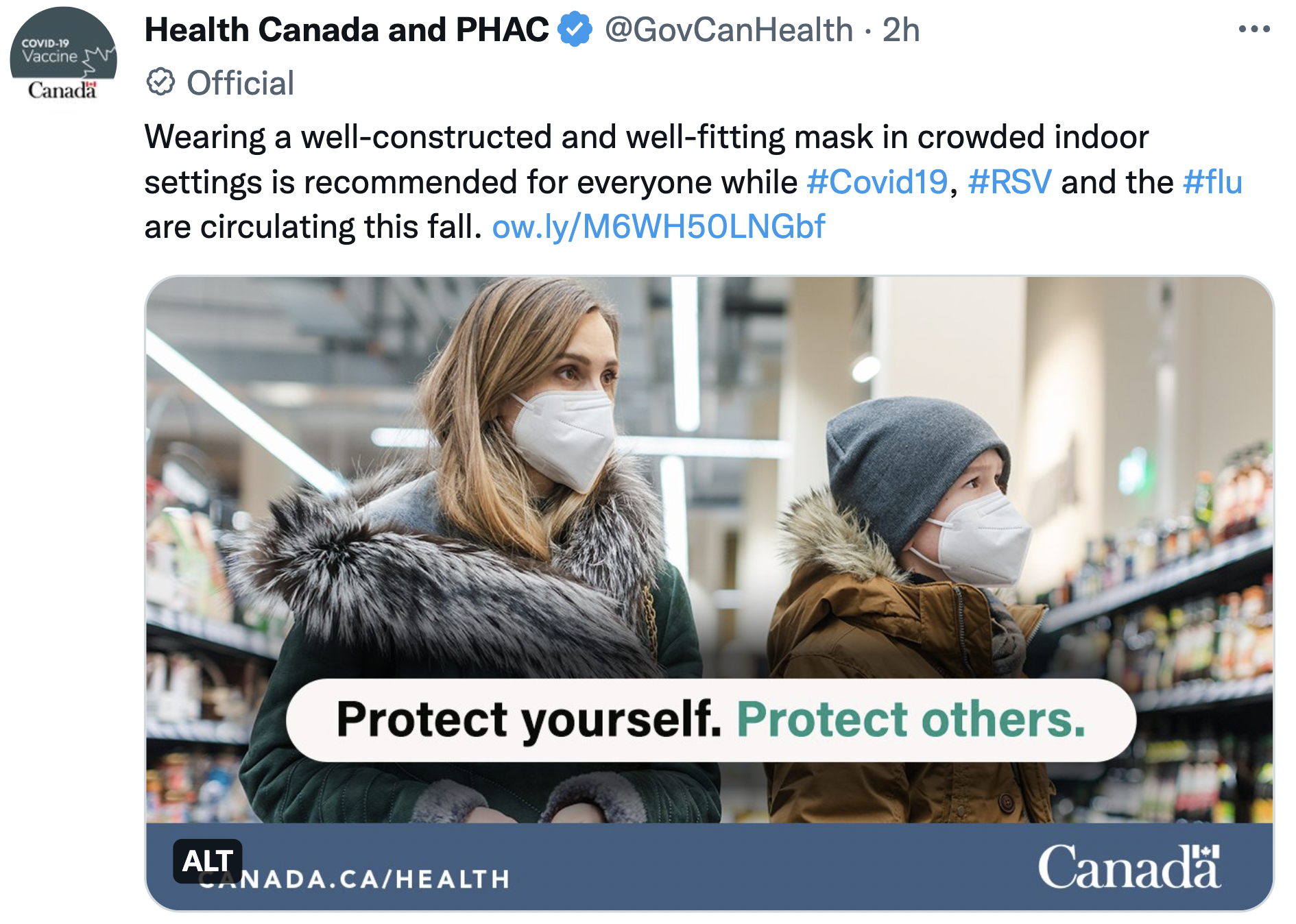
NOTE: When I say masks, I mean NIOSH certified N95s or better - aka respirators. They do signficantly stop the spread of viruses.
I posted on twitter that I was starting to understand some concerns some people have raised about masks and that I think we need a new approach to get more people on board, and I was hit with an onslaught of comments along the line of, "They're playing you," and "I just can't bring myself to care at all about anti-maskers." I think this view is propagated because people against masks who are loudest on social media tend to be of a similar ilk: It's the pro-freedom, anti-everything group that bombards our posts, so they might colour the way mask advocates see anyone unmasked. But I've discovered there are others out there that don't fit the mold. And, if we want to get everyone in masks, then we have to care about anti-maskers enough to try to understand their position and bridge the divide. Instead, people got mad that I could have some compassion for them.
It doesn't help anyone to lump them all together as sneaky and uncaring. I've argued before that anyone who is able to mask but won't is either misunderstanding the science and doesn't know they present a risk to others (which is totally on public health and our inept/corrupt premier), or they don't care they present a risk (sometimes, in part, because they don't know how serious the risk is, which is again on public health and our inept/corrupt premier). I still think those two different groups exist, but now, after getting tons of emails on masks as a trustee, I recognize there is huge diversity within each category.
A few parents are upset that I'm trying to "bring back masks" in schools. Some have threatened to take their kids out of our board if we force masks on them again. The motion I presented last Monday very carefully tried to assure people that I don't want to force kids to do anything they don't want to do, but I do want to help more kids, who want to wear a mask, feel like they're allowed to wear one. From what I've been hearing from tons of parents, their children won't mask in class because people bug them about it, or remind them they don't have to mask, sometimes even their teachers.
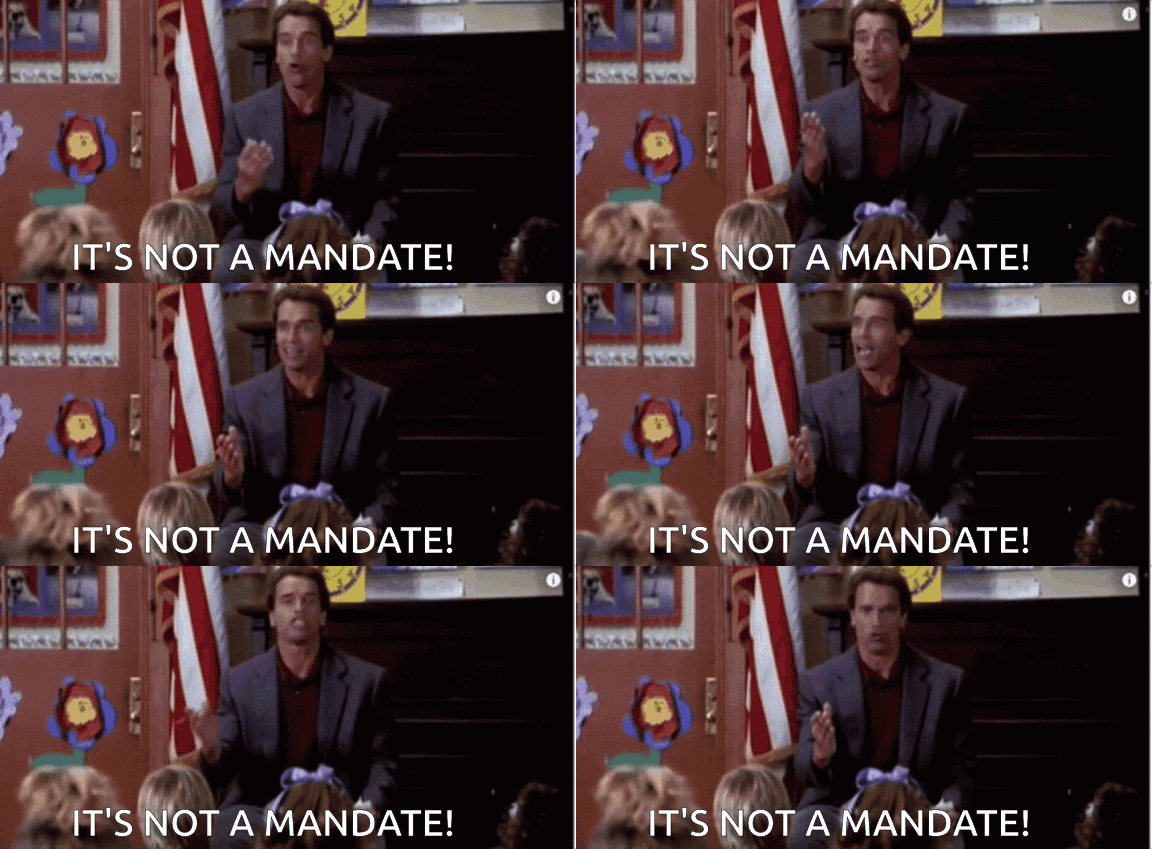
The motion itself starts by acknowledging that a mandate won't work, and then my preamble went further to explain that this is a way to find a middle ground so there really will be a free choice to wear a mask or not. We need to do more to make staff and students really aware that we are following public health guidance, which STRONGLY recommends masking indoors. We're already officially encouraging masking, so I'm not asking for anything to change as much as I'm asking for us to do more. The encouragement isn't being heard in the classroom.
Here's a run-down of what it's like presenting a motion to request that students masks if they can, two weeks ago, and the final motion that was passed last night. It's been picked up by City News, CTV News video, CTV News article, CBC News, and NewsTalk 1010. Some of the articles present it as if it's a done deal, but it still has to be ratified on Monday, and then it's in place officially next Tuesday.
When writing a motion, trustees can suggest a goal (what to do - encourage masks routinely), but can't make operational suggestions (how to do it - a morning announcement asking to please mask, or maybe even a PSA contest!), not even as an example of how the goal might be reached, so it will be in the hands of the board and maybe individual schools to decide what it will look like in practice. The full motion and preamble is down below.
Have you ever known someone find it impossible to realise and admit they were the victim of a scam? We're seeing it now with hundred of millions of people refusing to admit they've been taken in by a public health scam. They're at the stage of believing and trumpeting absolutely anything else, however implausible, rather than admit to themselves or anyone else that they were fooled into being tricked. And just to be clear: The public health scam was that it's ok to catch Covid and give it to everyone. Covid is bad, and repeat Covid is awful.
It's similar to victims of abuse - but instead of being directly harmed by officials, we're just being put in harm's way over and over.
"penned a number of articles advocating against vaccinating children against Covid. He made a YouTube video calling it 'bad public health policy.' He also railed against masks, distancing, and even indoor ventilation. A number of public health influencers took up his message and discouraged it all."
Wildfire concludes that, because of these messages, very few kids in the states were vaccinated, but my own experience has been that finding vaccines was a struggle until my youngest turned 18. Now it's so much easier to get new vaccines as soon as they're out. But the nay-sayers definitely had some effect.
Or perhaps we should be casual observers watching the end without comment. Hmmm....
A few years ago, a friend with a similar house as mine in a similar neighbourhood complimented my laundry line, but bemoaned the fact that it wouldn't be possible for her to have one. As I provided ample rebuttal to each point of opposition that started with "I'd would, but", she eventually stopped me with, "I'd would, but I just don't care enough about it. I wish I wanted to more, but reducing electrical demand is not a priority for me."
We need to get to a point where people make it a priority, where people are shocked into action. Hailstorms in Mexico might be a start. But some of my travel-loving friends, and one of my own kids, still have no intention of slowing down despite further evidence that air travel is even worse for the environment than we thought. Denial in the form of "I'll just drive a little less to compensate for a couple air trips each year," isn't going away fast enough. Or, more recently and disturbingly, a friend's solution: "Travel more and have lots of kids and grandkids and enjoy life, and then we can all just take suicide pills when it gets too dark out there." Her only concern with her plan, if I'm remembering correctly, was if her kids died before administering doses to their children, leaving the little ones behind. Yikes.
I caught Al Franken and David Letterman's Funny or Die series on climate change: Boiling the Frog. It's vaguely informative and not particularly funny, but fans of either guy might be willing to check it out. They focus on what their children and grandchildren will have to live with, and how they'll answer when asked what they did about it all, which I think is a fairly relatable tactic. And at about three minutes each, it's easy to watch an episode while you're waiting for the kids to get their shoes on. It's great for a populous with short attention spans, but it's hard to find a funny angle to talk about the dangers we're facing.
One episode referred to the show Years of Living Dangerously, which I hadn't heard about despite being three years old. It's a star-studded series (including Letterman in one episode) exploring climate change with lots of dramatic shots and music, but, based on the premiere only, it's not walking the walk. The very first scene has Harrison Ford excited to be flying a jet to visit with climate scientists. In one of the Boiling the Frog episodes, Franken asked Letterman, couldn't he just read about India's coal problem without travelling there? It's an important question. We have lots and lots of movies about climate change already. I'd put DiCaprio's film at the top of the list for clarity and persuasiveness. So it's been done. We need to stop flying film crews all over the world so Ford can say, ominously, "I'm going there to find out more!". I'm all about this stuff, and it got excellent reviews, but I won't be watching past the dramatic premiere.
The information is all out there in multiple genres and media already. Maybe it's got to move out of the documentary arena and into the HBO dramas for people to start paying attention. We need a risk-taking coming-out show like Ellen had when her character admitted to being gay. It's a similar risk to start talking about environmental destruction on a popular show in that sponsors might pull their ads, but, if it's done well, it could raise ratings enough that sponsors will come back. Then all other shows will scramble for a token environmentalist on their show! Right?
Somehow, of course, even despite religious protests at the time, two women kissing has a bigger draw than people choosing bikes over cars or overtly recycling or refusing to fly anywhere for ethical reasons. And it has a way bigger draw than famous people flying place to place to look at desolate and destroyed areas of the world.
I just watched this four-hour doc on propaganda and social change and how we're swimming in Freudian concepts like it or not. It's older (2002), but it's compelling viewing useful to weed out the ideas of Freud from those of his followers. My notes are paraphrased (and editorialized) below:
1917 - the Emotional Root of our Desires
Edward Bernays (1891-1994), the father of public relations, is the nephew of Sigmund Freud, the son of Freud's sister and Freud's wife's brother. At just 26, he was asked to join Woodrow Wilson in creating a "Public Relations Council" to promote the war effort. He used conversations with his uncle Freud, whose ideas were soon after published in General Introduction to Psychoanalysis, to understand how people make decisions. Freud's writing was just about understanding why we act. Bernays used that framework of the psyche to develop a means to influence the collective behaviour of the masses.
As much as we like to think our reasoning abilities make us markedly different from other animals, we can be easily persuaded to act if someone plays on our irrational emotions. Bernays' first experiment to test the idea involved marketing cigarettes to women, which involved breaking a strong social taboo at the time. He convinced some suffragettes to march in the Easter parade, smoking, and called the cigarettes "torches of freedom." He spun the taboo into an oppressive restriction to be overcome, which made smoking immediately a symbol of power and independence. This was a brand new way of marketing products.
There was a growing concern with industrial overproduction, so Bernays helped the US shift from a culture focused on satisfying needs to one obsessed with fulfilling desires. He promoted the idea of regular citizens buying shares in companies, and he got film stars to come to parties at the White House, forever after linking politics with celebrity right up to today when Americans are choosing between Meryl Streep and Scott Baio.
1920s - Consumerism Will Save Us from Ourselves
Bernays arranged for Freud's works to be published in the U.S. and gain a widespread audience. He was his unofficial agent in the U.S. Freud wrote about how easily unconscious aggressive drives can be activated in crowds, concluding that man is a sadistic species. Bernays decided that if people are driven by irrational forces, then they need to be guided. If he could stimulate the inner desires of people and satiate them with things, then they wouldn't act on their aggressive impulses. Consumerism was a means to pacify the people as well as to make profits. He developed a system some called "enlightened despotism," or, as Walter Lippmann called it, "the manufacturing of consent, " a term made popular by Chomsky. Bernays saw how ads could create desire which could be easily satisfied and thus transform people into happiness machines.
Herbert Hoover agreed, and democracy became palliative. Democracy was no longer about challenging the relations of power, but about sustaining them.
1930s - Roosevelt Appealed to our Reason
Freud wrote Civilization and its Discontents and clarified that civilization is a necessary means to restrain our animal forces. Individual freedom is impossible and far too dangerous, so we must be controlled externally (to suppress our violent and sexual urges), and therefore we will always be somewhat discontented. It's necessary to be limited individually in order to survive collectively but that's not to say, as Bernays suggested, that we should be controlled en masse to pacify the masses or otherwise (increase profits). But Bernays was right that we can be.
After the market crashed, the U.S. faced angry mobs out to fight corporations. Government used the power of the state to control the market (Roosevelt's "New Deal"). Roosevelt worked with George Gallop to poll people's ideas. They rejected Bernays' ideas, instead believing that people could be trusted to make wise decisions. They were going to avoid any manipulation and appeal to citizens' rational faculties.
Meanwhile, in Germany, Hitler abolished the huge numbers of parties running, and the National Socialists were elected. They took control of business with a motto of "service not self." He aimed to channel desires towards a better society rather than satisfy the selfishness of individuals. Joseph Goebbels was in charge of promoting ideas to the people, and he admired the way Roosevelt was controlling markets. Goebbels went further to encourage aggressive forces in citizens as he believed officials could control them to serve their final ends. He was right.
In 1936, Roosevelt pressured more control over big business and was re-elected. Businesses fought back with help from Bernays, starting an ideological warfare against the New Deal. They created the National Association of Manufacturers, which launched campaigns to create emotional connections between brands and businesses. He filled papers with the messages that business, not government, created America, and he created a vision of a potential utopia for the masses that couldn't happen with government restrictions on the market. The government was worried about the affiliation between the press and corporations and started creating national newsreels to teach people how to check for bias in the news, but it was just a matter of time before controlling the markets in any way, even price controls to benefit the poorest in society, would be linked to fascism.
Bernays' methods were instrumental in persuading the public towards a pro-corporate stance, and he was called to help the CIA to reestablish government control over citizens. He appears to have had few allegiances except money and maybe the thrill of figuring out what persuasive measure would work in a given situation.
1940s - We Can Be Masters of Our Domain
After Freud's death, his daughter, Anna Freud, began writing and speaking more. She started with her dad's premise that people must be controlled for society to work, but she believed people could be taught to control themselves. Freud thought we need to understand our desires and the unfortunate necessity of external controls, but Anna believed we could train our desires internally by changing how children are raised. She started by experimenting on two depressive children, and became close with their mother. When she saw the results of the Nazis unleashing the instincts of their citizenry, she started working intensively with large groups of children in need. Primarily she thought children need to be trained to conform to rules of society as a way to strengthen their ego, which will in turn help them control their own unconscious. (She also established specific defence mechanisms well beyond her father's work, yet they're almost always credited to Sigmund.)
Almost half of the returning soldiers suffered mental breakdowns. Psychoanalyst Martin Bergmann was recruited by the U.S. government to interview returning soldiers, and it was the first time people started exploring and discussing feelings. Bergmann decided that stress and mental breakdown are not caused from conflict, but from soldiers' personal childhood desire for aggression. According to him, they weren't traumatized by the aggression itself, but by their eager participation in it, by their own letting go of their instincts to fight. He further surmised that chaos at the base of human personality can infect society, so people need to internalize democratic values. This led Truman to create the National Mental Health Act to deal with the number of unstable men returning from war.
Psychiatrist brothers, Karl and Will Menninger, wanted to use Anna Freud's ideas on a wide scale to control the unconscious desires of citizens, so they invented Guidance Counselling Centres everywhere and encouraged everyone to go. Their focus was on controlling the "fire of emotions" within.
1950s - Identifying with Brands is Promoted as Therapeutic
Things shifted a bit as Harold Blum came on the scene and thought we could be "appropriately emotional," that we should be allowed to let go within limits since we can master our own passions. And Ernest Dichter, Freud's old neighbour, set up Motivational Research centres. This was the dawn of the focus group and the Mad Men style of marketing. Focus groups would have people free associate about products, encouraged to express their feelings and associations. A famous case is when they asked women why they didn't buy instant cakes, and realized just letting women add an egg to the mixture would increase sales dramatically. The underlying idea driving Dichter was similar to Bernays: that we can use the environment to strengthen and stabilize human personality; it's therapeutic and confidence-boosting for people to identify with specific brands. It was also hugely profitable, which likely didn't hurt. It's hard to say which was more important for the psychiatrists.
Bernays worked with Howard Hunt of the CIA to launch a "terror campaign" and stage a coup in Guatemala by making the conditions in the public and in the press more amenable to such a thing after a more socialist leader insisted on better working conditions (and thus lowered profits) in the American-owned United Fruit Company. The psychological warfare worked enough to provoke the army to stand down. They linked the former leader to communism, made the previous government seen as a threat to democracy, and made business interests seen as democracy incarnate. Bernays openly believed that most people are terribly stupid and can be manipulated to act like automatons.
Government money was given to psych departments in universities to do experiment on brainwashing. Ewing Cameron, of UCLA but working in at McGill in Montreal, used drugs and electroconvulsive therapy in an attempt to wipe and replace people's memories. It didn't work the way he hoped (with some horrific results); and he surmised that people are more affected by external persuasion than internal manipulation.
Anna Freud kept working on children conforming to social norms. She was friends with Ralph Greenson, Marilyn Monroe's therapist, who got Marilyn to move into his home as he decided that his family was the social model to follow.
1960s - Anti-Conformity Rebellions Led to Corporate Losses
After Monroe's suicide, Arthur Miller argued against this psychiatric method that suggests any suffering is a problem. Miller insisted we must let suffering inform our lives, not try to cure any and all tumults we feel. The method advocated by Greenson attempted to control people rather than free them.
Herbert Marcuse also criticized the method. He called it a childish application of psychoanalysis and explained that the planned obsolescence of our time, with a huge variety of things to have and do, leads to a schizoid existence. The destructiveness of the individual is due to "empty prosperity." He called out psychiatry for being used for corrupt purposes, and Anna Freud for increasing repression in her patients through forced conformity. Evil isn't from maladjusted inward conflict, but from society, and it must be challenged, not adapted to. Martin Luther King Jr. agreed with the words, "I am proud to be maladjusted" to a corrupt society. And then the two children that Anna Freud started her method on, both committed suicide. This provoked a new student left to attack this system of social control, sometimes violently.
Wilhelm Reich challenged Freud's premise that people are driven by animal instincts and society is a controlling force that keeps our raging inferno of emotions in check. He countered that our drives are positive and repression by society distorts them. Reich thought violence is a result of denying our libido full expression; neurosis is a result of ineffective orgasm. And then things got really weird with the Human Potential Movement and confrontational experiences and encounter workshops that involved violent and sexual release. Werner Erhard got on board with the EST movement, believing that we can create ourselves individually, only the individual matters, and we can largely ignore society. Students and young adults became less political as they became more self-obsessed.
The downside of all this self-exploration was a corporate loss, particularly to life insurance companies, which are built on the protestant ethic prompting us to sacrifice for the future. Too many people were living for today. The new enlightenment needed products to help people express their individuality, but, at the time, variety wasn't cost-effective for factory production.
1970s - We Can be Reduced to a Lifestyle
The Stanford Research Institute (SRI) was used to measure and test desire satiation. Abraham Maslow, a humanistic psychologist famous for his self-actualization test, also created a tool to measure people's values on a hierarchy of needs that rises as people liberate their feelings. This was the beginning of categorizing society for marketing purposes. He believed we can be defined by the choices we make, and he surveyed people to see how people fit a set of identifiable types he called: lifestyles. The Values and Lifestyles survey (VALS) categorized people into more specific purchasing types than could be determined by age or income: Mainstreamers have a need for security and belonging; aspirers have a need for status; succeeders have a need for control; and reformers have a need for self-esteem. If a product reflects their attitudes, people will buy it. Instead of focus groups discussing products already invented, they used market research to invent new products. This would soon help elect politicians as well.
1980s - We Can Buy our Identity
Self-actualization seminars from the likes of Wayne Dyer and inner self work became more popular (polls showed an increase in interest from 5% in 1970 to 80% in 1980). Reagan ran on the new individualism model with his speech "Let the People Rule" (his We the People speech 8 years later has a similar flavour) knowing that people now embrace whatever gives the illusion of independence. It polled well and many former republicans voted conservative because of the PR spin, which allowed neo-liberalism to thrive. People feel entitled to have the best and to have power over their leaders, and they want their every whim satisfied.
New technology allowed short runs of consumer goods, so people were now able to buy their identities. They felt liberated, yet were more dependent on business than ever. Products were now necessary to their happiness and their very sense of self. Without things, people no longer have any identity. Scary.
Matthew Freud, of Freud Communications (great grandson of Sigmund, and son of an MP accused of pedophilia), helped manufacturers get control over how their corporation appeared in print. And Rupert Murdock's right in there too, of course.
Robert Reich laments that we no longer have a society, just a bunch of individuals focused on themselves. Bernays found a way to get people to see goods as a means to respond to deep emotional yearnings. Politicians used these business methods to find out what voters want and give it to them, and they stopped caring about having a clear and specific mandate. They summoned the greediest aspects of human nature by focusing on individual personal satisfaction. It was a triumph of the perspective that individuals are purely emotional beings easily led off a cliff.
According to Reich, the left used to persuade people we have common interests. Roosevelt persuaded people to join together in labour unions, which drove the democratic party. The worst thing Reagan did was to make denial of compassion a respectable trait.
1990s - Fluctuating Desires Drive the New Democracy
To get re-elected, Clinton bowed to this pressure to satisfy individual voter concerns. (Tony Blair did the same thing in Britain.) It turned politics into a consumer business that can fulfill personal desires. They could learn what voters want and move themself there. Clinton conducted neuro-personality polls to find day-to-day concerns and ran on a platform of V-chips for TVs and mobile phones on busses rather than the typical foreign and domestic policies discussed in previous elections. This was spun as a means to end elitist politics in that the people are now being heard, but the practice suggests that democracy is nothing more than pandering to primitive desires. It's a politics of the self. It's a problem because people are contradictory: they want lower taxes and better public services. We're trapped in short-term, conflicting policies.
This isn't a better form of democracy, a "continuous democracy," it's just propaganda for corporations. Remember that Bernays didn't believe democracy could work and that the masses had to be led, that it's too dangerous to let people have control over their own lives. Consumerism is a way to give the illusion of control while allowing the responsible elite to continue managing society. This is the end result of that premise. We just feel like we have more say now. People's desires are in charge instead of their will. Democracy has been reduced from something that assumes an active citizenry to something which now is increasingly predicated on the idea of the public as passive consumers.
We have to appeal to the public to care for others more. We forgot that we can be more than our immediate desires. Reich summed up the two views of human nature: essentially emotional or rational. The Freudian view suggests we're just bundles of emotions, and businesses have honed their skills at responding to that. But politics must be more than that. Politics and leadership are about engaging the public in a rational discussion and deliberation about what is best for society. People need to be respected for their rational abilities to debate what is best.
***
2000s - Do We Know Enough to Change?
Now we know, or think we know, about neural pathways. The more we restrain ourselves, the easier it gets to avoid certain stimuli. If we have chocolate around, but stop ourselves from eating it, it will get easier to avoid it, and eventually we'll stop being so drawn to it. I practice this myself by actively avoiding social media at certain times of day, and it's something I don't have to actively work at quite so much anymore. The corollary is also true, that the more we do something, the easier it is to do and the more likely we are to do it. The more we allow ourselves to have public outbursts, the more likely we are to have them. We have to practice self-restraint.
This leans towards Anna Freud's work, but she went too far dictating what all needs to be controlled, and not far enough with other tactics to help alleviate profound depression. I think it's less a training that we need, but more of a constant reminder about our goals for ourselves as people so we're not led astray.
Today we also know about neuromarketing. They don't need market research or focus groups when they can look at our brains directly to find out which ads cause a dopamine spike. The masses can clearly be led towards consumerism or acts of genocide, so we need to be ever vigilantly thinking about why we feel like we need new clothes or why we feel a hatred for one group or another.
The fact that Bernays and others are able to manipulate society is testament to Freud's original theory hitting a nail on the head in determining how our drives affect us. But what some people do with that understanding is frightening. This clarifies a pivotal role for schools (complete with lessons on Freudian theory) to ensure we wake people up to their own decision-making as well as to their internal drives. We need to demand a democracy based on collective will for the benefit of society, not individual desires for the benefit of the self.