Showing posts with label friends. Show all posts

Tuesday, August 29, 2023

We See What We Want to See

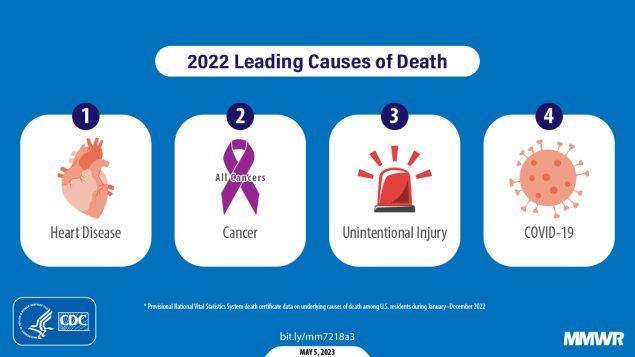
Lots of people still don't quite understand how Covid spreads or how serious it is, causing mass disabilities and continuing to cause significantly more deaths that traffic collisions, although traffic collisions plus drug overdoses and other accidents have edged their way into third place. However, the accuracy of that is questionable as Covid isn't always noted specifically as an underlying cause anymore (like in a 30-year-old who died from a heart attack). 

I have some friends who automatically mask around others, and some who will wear one if asked, and some who are kind enough to try to ignore the mask on my face despite no longer believing they're necessary. I'm very lucky to have no family or friends who deride or belittle me for continuing to take precautions during this ongoing pandemic. I know people who have ended relationships with loved ones, some getting divorced, because the people they care about refuse to take their concerns seriously, or are embarrassed that they still wear a mask in public, or have absolute contempt for people who are trying to avoid this virus. 

It's amazing to see this divisiveness phenomenon right before our eyes! 

Sunday, July 12, 2015

On Friendships of Utility not Virtue

It sounds horrible, doesn't it?  Like we're using people, hanging out with them only because they have a nice car or because they often pick up the bill for lunch. I wrote here about utility like it's a bad thing, but what if we use people for their company? Does that make it different? And is that better, on an ethical continuum, than ditching people because they're bad company?

I have people in my life whom I find irritating and infuriating, yet I also love them all to bits. From time to time sometimes remarks on a friendship I have with someone I have had occasion to despise in the past. It seems some people are more likely to completely blot people out of their lives forever, and I think this has become a trend in relationship dynamics.

One point of view rejects the popular suggestion to ditch negative Nancies in favour of surrounding yourself only with positive people because the idea fosters a prejudice against people with depression. I'd add it also is very much using people in the worst way to improve your own emotional experience of the world (or something like that) instead of seeing people as valuable in their own right (not just as they relate to you).  But I also question the suggestion that same writer makes of ditching people who are "toxic," or perhaps my issue really is with how we define toxic. Sometime people are jerks. My general path after someone does something jerk-ish is to either avoid them for a while or, more expediently, tell them off, then there's often a sheepish awkward time to wade through, and then you can hang out again. The key part is the sheepishness, the remorse, some suggestion that it wasn't good behaviour and some movement towards changing that. People who get in a cycle of jerk-apology-jerk... or just jerk-jerk-jerk... can take a hike, but I don't think they're as common as self-help articles would have us believe. I fear we're sometimes a little quick to call a minor transgression "abuse." This isn't to negate actual abuse, but the contrary: when we use the word when it's not warranted, it waters it down until it becomes meaningless. It must be used with care.

The short answer I sometimes give for why I hang with people who have wronged me in the past is that I forgive easily, but that's really bullshit. If all were so easily forgiven, I don't think the emotions would be so easily dredged up at a reminder of that one horrible thing they did so many years ago. A different short answer offered by a sometimes-infuriating friend I adore is that I'm a walking victim, a sucker for punishment. I think it's more complicated than that.  

I think it's that I recognize we all suck sometimes. All of us do. But we're also all greater than the sum of our worst bits. So it's baffling to me that some people would choose to completely write off someone, forever, for a transgression they themselves might have committed had they been in the same circumstances. I try to remember that, even though I try to ensure my decisions and actions are moral, I am embarrassingly fallible. Then I end up friends with people whose decisions I don't wholly respect, but I also don't entirely respect some of the decisions I've made either. Works in progress, we are.

Typically I waver morally due to fear or ignorance. I might get so concerned with money or safety that I make regrettable decisions. Or I don't stop to think through the ethics of a decision, like putting money in a TFSA even though I think we should be taxed on interest on extra money we've accumulated. However, fear over losing social status doesn't drive me to immoral acts as much as it seems to affect others; I'm pretty content on lower ground. And I think this fear is one that can lead to a whole lot of mean-spirited actions in attempts to maintain our place on the pecking order. This is what causes some to go down that throw-them-under-the-bus path. But all things considered, we all falter in our choices, and we'll never get on the other side of that.

What I find trickier, though, is when people are affected by none of this, but they have a strikingly "different" morality than I have. Of course, a different morality is typically perceived as an immoral way of thinking unless I can be convinced that my view is actually in error. Years ago I was about to sell a house and found out, after making a verbal promise to a buyer but before signing, that my house was worth significantly more than I had thought. It was my word vs more money. It wasn't really such a dilemma because I had made a promise, and that was enough for me. I would have been sick with guilt had I told the buyer differently. But when I told friends of the situation, I was surprised by the number (all but one) who thought I had made the wrong choice. One told me, "When money's involved, then ethics have to go out the window." I feel the exact opposite is true: that ethics needs to deploy a steely resolve when money is in the picture. The only other person on my side also has a philosophy background, which leads me to believe that affects our ability and willingness to consider issues from this stance - a way that's a little less self-serving.

More recently, my daughter had been chastised by her friend's mom for stealing pastries from the friend's house. My daughter protested that the friend had stolen them, so it wasn't her fault. I asked her one question: "Did you know your friend wasn't supposed to have them?" Since she had, and she stood to benefit from the action, then, as far as I'm concerned, she's complicit. Therefore, she should apologize even though they didn't get a chance to actually eat the treats yet. It's a hard but, I believe, vitally important lesson to learn to take responsibility when we're involved in a wrong-doing even if we're not the direct actors. But a friend thinks my daughter's not responsible at all, and that give me pause - about the friend, not the morality of the situation.

These aren't as extreme examples as trying to maintain a friendship with someone who openly, head held high, plans to vote for Harper, but it can be unnerving to watch your view of important ethical considerations so casually tossed aside. None of these are deal-breakers for me though. But should they be? Is it lacking integrity to continue fostering relationships with people we find immoral? Or is it of the highest ethical standing to turn a blind eye to other's foibles?

But back to that utility thing: there's a cost-benefit analysis that comes into play that I don't sit with comfortably. I spend time with people I find entertaining. Their moral choices could be questionable, but if they make me laugh or think or get me up dancing, then whatever. There are people out there who are far more careful with their decisions, but if they're boring, then I'm out. I will hang out with people who don't recycle or who think feminism is a waste of time or who think some people should 'go back to their own country' if they like the same movies I like. And that feels really shallow. It is really shallow. I clearly value entertainment over ethics, but I also can turn a blind eye to the nasty parts for the benefit of the other bits of people who might be generally kind even if their world view is on the narrow side.

Is it better (more ethical) to refuse to talk with people because of their stance on an issue or to tolerate the questionable ethics and refuse to give up on anyone that presents the mildest connection?

What would Aristotle say?

He'd call these relationships I've described as, technically, based on pleasure, not utility, and see them as of a slightly higher quality than utility because we appreciate the witty character of the other rather than just their pragmatic usefulness. We're still using someone for something, but it's a product of their character we're using rather than their things or abilities, so it's somewhat less transient. Permanence is everything for many of the ancient Greeks. Things that last longer are necessarily better, which is an arguable way to value friendship at the outset. Both of these conditions, pleasure or utility, are lacking because they can change over time. If my sense of humour or taste in music alters, then my friendships might fall apart. The day it hit me that catch-and-release fishing is barbaric altered one relationship dramatically, but that doesn't necessarily negate the friendship that existed prior to the change, however brief.

But, according to Aristotle, these relationships are 'incidental' because they're selfish in nature. They're about a net gain from a transaction of some sort, hence my discomfort. But is it a problem if it's a mutual using, if there's a net gain on both sides? IF someone's no longer funny because of an illness, and the friendship dissolves, does that mean it didn't exist? Is a fairweather friend still a friend? What we're supposed to be after is a friendship in which we both admire one another's values and that helps us to be more ethical than we would be otherwise. This is something I might hope for in a romantic relationship, maybe, but I can't actually imagine finding it in a variety of friendships.
"Do men love, then, the good, or what is good for them [or what seems good for them]?...To be friends, then, there must be mutually recognized as bearing goodwill and wishing well to each other" (2).... those who love for the sake of utility love for the sake of what is good for themselves, and those who love for the sake of pleasure do so for the sake of what is pleasant to themselves, and not in so far as the other is the person loved but in so far as he is useful or pleasant. And thus these friendships are only incidental; for it is not as being the man he is that the loved person is loved, but as providing some good or pleasure. Such friendships, then, are easily dissolved, if the parties do not remain like themselves; for if the one party is no longer pleasant or useful the other ceases to love him....Perfect friendship is the friendship of men who are good, and alike in virtue; for these wish well alike to each other qua good, and they are good themselves. Now those who wish well to their friends for their sake are most truly friends; for they do this by reason of own nature and not incidentally; therefore their friendship lasts as long as they are good-and goodness is an enduring thing....But it is natural that such friendships should be infrequent; for such men are rare. Further, such friendship requires time and familiarity; as the proverb says, men cannot know each other till they have 'eaten salt together'; nor can they admit each other to friendship or be friends till each has been found lovable and been trusted by each. Those who quickly show the marks of friendship to each other wish to be friends, but are not friends unless they both are lovable and know the fact; for a wish for friendship may arise quickly, but friendship does not" (3).
For a friendship to exist, we have to wish the other well, so any serious competition between two buddies could end things even if they keep hanging out as if they each actually wanted the other to get that promotion. But that's an interesting bit he says at the end of that passage: that a mutual wish for friendship is different than a friendship. According to Aristotle, if we're not alike in virtue then the company we keep are mere wishes rather than actualities.
"This kind of friendship, then, is perfect both in respect of duration and in all other respects, and in it each gets from each in all respects the same as, or something like what, he gives; which is what ought to happen between friends....Those who are friends for the sake of utility part when the advantage is at an end; for they were lovers not of each other but of profit....This bit is key to my discussion here: For the sake of pleasure or utility, then, even bad men may be friends of each other, or good men of bad, or one who is neither good nor bad may be a friend to any sort of person, but for their own sake clearly only good men can be friends; for bad men do not delight in each other unless some advantage come of the relation" (4).
But, as I suggested, this can happen in a pleasure or utility based relationship also out of sense of equity. It's not the case that friends will necessarily want to each have a better deal and run as soon as we're on the losing end. We can be ethically and equitably minded regardless of affection and equal virtue. The only thing lacking seems to be longevity. It might not go on as long as one with matching virtues. But I question the level of effort we put into friendships that aren't of this special brand or "true." When Montaigne's BFF got the plague, he sat with him day and night until he died. I would definitely do that for one of my kids, and likely for a close family member or partner, but with most friends, I might drop by to offer help, to offer a place if they're put out on the street, or offer labour to fix a shed, or offer an afternoon of company. But I wouldn't be there day and night even if I might want to be. There are closer loved-ones who would sit by the wasting body. I'm not at that level with any of my friends, and it's curious that we relegate that much more to romantic attachments now. The romance-friend hierarchy flipped in the past couple of centuries.  But I don't believe my lack of bedside sitting means the friendship doesn't exist - that it's just a wished for friendship.
"The truest friendship, then, is that of the good, as we have frequently said; for that which is without qualification good or pleasant seems to be lovable and desirable, and for each person that which is good or pleasant to him; and the good man is lovable and desirable to the good man for both these reasons...those who live together delight in each other and confer benefits on each other....Those, however, who approve of each other but do not live together seem to be well-disposed rather than actual friends. For there is nothing so characteristic of friends as living together" (5).
He paints a picture of friends who are so close they want to spend their days and nights together. I think that would be ideal - based on fond memories of living with friends in university - but I can't imagine it happening once everyone starts families. It works better if we're only talking about men, and the women and kids are cordoned off elsewhere. The best living situation I had was with a friend who called me, stuck in BC with only just enough cash for a flight home, but then nowhere to live. I offered free room and board in exchange for all the cooking, cleaning, and general upkeep of my house. He stayed almost a year until he got a job out of town. Today we still each think we got the better deal. It's only when you live together that you can start routines like Thursday night homemade fries in front of Seinfeld. They seem like nothing, but little traditions are bonding in a way we don't always notice until later. It's effortless to maintain a friendship when they're always there to talk with and eat with and argue with. But now that he's gone, I haven't seen him in years. Was that just a wished for friendship?

Aristotle's last bit of advice:
"People who are supremely happy, too, have no need of useful friends, but do need pleasant friends; for they wish to live with some one and, though they can endure for a short time what is painful, no one could put up with it continuously, nor even with the Good itself if it were painful to him; this is why they look out for friends who are pleasant. Perhaps they should look out for friends who, being pleasant, are also good, and good for them too; for so they will have all the characteristics that friends should have" (6).
Good AND good for them? That's an awful lot to ask of such a fallible lot. It makes me wonder if we've truly lost that much character over the millennia or if Aristotle's standards were always out of reach for most of us.
Friday, January 3, 2014

On Our Continued Sexual Repression

Sherlock & John
I watched the first episode of the new season of Sherlock last night.  There's a sub-plot with NO spoilers here:  John Watson gets engaged to Mary.  Mrs. Hudson, the landlady, is shocked that he's engaged to a woman since he and Sherlock were obviously so "close" - and so soon after his passing and all.   John vehemently objects to the insinuation that he is now, or ever was, gay.  

In class before the break I read a bit about Montaigne's affection for La Boétie, and the very first comment I got from a pretty enlightened group was, "He was obviously gay."

Montaigne and La Boétie, BFFs

And then one of the essays I marked contained a discussion of the openness of sexual ethics today compared to historic restrictiveness.  And I commented on the paper that I don't think we've come nearly as far as we think we have, even if we just focus on this part of the world.

Our sexual ethics have changed, for sure - over the relative short term in particular.  I've lived long enough to see an unbelievable change in our respect for same-sex relationships, from killing them to revering them in my short lifetime.  Now homosexuality is in fashion to the point that some people want a gay friend or two to make them more interesting by association.  The same goes in some circles for polyandry.  But we're still messed up about sex.  And we don't understand our history on this enough to see our trajectory.

R. & Julie
Romance as the end all and be all of relationships is a relatively new idea - maybe 200-years-old or so.  Previously, passion towards one person was seen as a social problem - look what it did to Romeo and Juliet.  That wasn't written as a romance to emulate - the way most remakes will have it, but as a cautionary tale.  It's a tragedy after all.  

For centuries, people could bond with the same sex without an assumption of sexual tension.  Now that homosexuality is accepted in these parts, it seems to be a looming perception in the background of close friendships.  This is part and parcel of a view that a relationship with sex is the ideal - an accumulative view - which is the real problem.  As long as a sexual relationship trumps any other kind of dynamic, we have a greater potential to lose a variety of connections with others.  

Why is it so hard to believe that Montaigne and La Boétie loved each other but didn't have sexual feelings for each other?  I think it's because we can no longer imagine closeness without sexuality - which is repressive.  It restrains our freedom to have close, non-sexual relationships.  It's legal and overtly acceptable, but there's a subtle social pressure that suggests it's not quite right.  

Friends can be close, but not too close.  If any two people spend too much time together, they must be having sex - or they should be; they need to take it to the next level (as if it's a sign of progress).  Or, if they shouldn't be having sex, then they shouldn't be spending so much time together!  We've lost the idea of best friend, of companion without a sexual flavour.  Everything is coated in nuance.

I had a 15-year friendship with a guy that ended because of the number of people who insisted either we should be getting it on, or we actually were.  His girlfriend couldn't take it and gave him an ultimatum.  He picked her.  And lengthy conversations with men at parties are always suspect.  I have to stick with the women in the kitchen to avoid provoking the stink-eye (and that kitchen-thing still happens too).

We still approach love and connection fearfully and possessively.  

We've created a new normal that's no less constricting our experiences.   It seems that it's not the case that restrictions leave as we become more accepting, but that they just change and become less physically harsh.  Nobody is beaten for their desires (except pedophiles, that's still right out), but coersive social forces are no less a barrier to living comfortably with who we are and what we like.  There's a subtle social means of encouragement to stay within unnecessary and nonsensical boundaries.  

And that's not the only bit of sexual repressiveness of our times.  

It's blue because it's so cold!
I recently saw Blue is the Warmest Color and was surprised to see, in full detail, that women shave or wax their pubic hair right off even in France.  In the U.S. one study found that 60% of women 18-24 get rid of everything - and that it's really harmful!   Check out this video for a healthier perception of pubes (with puns galore). Beyond that, the rise in labioplasty convinces women that natural isn't beautiful unless it's perfect.  Looking the way we do naturally has always been an issue, but now it's gone further to include the bits that almost nobody ever sees.

Fetishes are still taboo.  People can talk about them on sensationalist TV shows, but, however kindly the host speaks to them, that they're there reveals them as freaks.  It's still not a conversation for social settings where other sex tales might be parlayed.  And, similarly, people who just aren't into sex that much keep it to themselves.  Any talk of either is met with concern and doctor suggestions.  It's seen as unhealthy not to desire sex with another person.  

Liking it too much or too varied is also a problem particularly for women.  Slut shaming isn't going away.  And the fact that people feel shameful about sexual encounters makes rape that much easier to get away with since victims are loathe to report.    

What keeps it all going, also, is the notion that talking about sex is somehow beneath us as intelligent people.  It's trivial and base.  So these issues aren't getting the attention they deserve.  As Freud said almost a century ago in Civilization and its Discontents
The demand for a uniform sexual life for all, which is proclaimed in all these prohibitions, disregards all the disparities, innate and acquired, in the sexual constitution of human beings, thereby depriving fairly large numbers of sexual enjoyment and becoming a source of grave injustice.
There's no evidence that Montaigne was gay, something he makes clear in "Of Friendship," but the suggestion of such is evidence that we still haven't grown enough as a culture to completely accept a variety of relationships including strong and lasting non-sexual friendships.  That's a shame.

Wednesday, January 1, 2014

2013 Ideas in Review

Facebook bombarded me with everyone's highlights of 2013 this morning, and I was struck with the urge people have to track the value of time spent by listing stuff they did.  It's all trips and big events.  When I consider all I had done this year, what came to mind first is a whole lot of sitting around.  I'm really good at that, and it's my favourite thing to do.

I sit around reading a writing and watching movies, but the highlight of my time sitting is always the kitchen table talks I have with whomever's at my table.  It's mainly the kids and I, and we often comment that we should set up a hidden camera and try to forget about it, because we are seriously funny people!  If we could capture our conversations for YouTube, we'd be rich!  But I also have friends that come and sit and drink and play music and tolerate my singing.

Like cutting Samson's hair, if you clean it, it loses its magic!
But in my time sitting, I also did a whole lot of fretting about the world (social justice and environmental erosion mainly), and about my work.  I'm going to consider a different approach to the world crap because what I've been doing is neither particularly useful nor enjoyable. Maybe tomorrow.

As for work, we started the year in strike action, and we ended it with some questionable micro-managing from the province. I'll say no more on that for the same reason I deleted most of my work posts:  apparently being perceived to be publicly complaining about the policies of my board or school can be grounds for termination, but I can complain about the Ministry of Ed documents all I like.  I understand this idea in principle - if I owned a small business and an employee tweeted negatively about it, I'd definitely call them out on it.  But, somehow this feels a little different.  And who's to say when my complains about ministry mandates are a bit too close to being about board mandates?  Nuff said.

Sitting around doesn't look like anything, but it's a lot.  When I was in university, writing essays at the kitchen table all day, my partner at the time, a tinner, would come home from work to find me in the exact same place as he left me.  As he peeled off his dirty work clothes, he'd often question how I could just do nothing all day long.  That I finished a 20-page essay didn't count.  And, 25 years later, that I wrote my thoughts on books and philosophers and political thinkers all year isn't fodder for facebook lists.  Thinking, talking, and writing about things just isn't share-worthy.

Which is a shame.

Is it because it's too commonplace or too uncommon?  Or because the ideas come and go without making it on snapchat?  Instead of listing the trips and events, wouldn't it be cool if people spent New Years Day considering all the new ideas they deduced or considered or solidified over the year?  I think it would make for a far more interesting bunch of facebook statuses to wake-up to at the very least.

Here's what I thought about mostly:

* It's amazing what we can do when we go for it balls-out even though we don't know what we're doing (I built a studio!).  But we all have limits. It's not the case that you can be or do anything you set your mind to do.  But, without trying you'll never know where your limits are.
* Bureaucracies suck the intelligence out of everything.
* Mainstream media is eroding body image and self-esteem, but we don't have to play with them.
* The planet's ability to continue to maintain life is so far gone, and so few care, it's likely unfixable.  As much as I abhor government intrusion in personal choices, I can't imagine what else could possibly turn this all around.
* Maybe we're screwed not because we're too greedy, but because we're also too compassionate.  Or maybe it's just greed as a species that we want every human in the world to live well (well enough that we don't have to see them suffer at least).
* Rape isn't going away nearly fast enough.  In fact, it feels like it's getting so much worse.  We still have a good, long fight on our hands on this one.
* Stoicism and Taoism are two of the best philosophies for coping with tragedies beyond our control.
* I still haven't been swayed from my agreement with Marxist economic strategies.  It's not about paying everyone the same, but ensuring nobody's being exploited.
* Art and music and dance and film (and cats) are phenomenal means of celebrating the world and distracting ourselves from its devastation.  I have unbridled enthusiasm for it all that won't be contained.  Even if someone points and laughs.
* Teaching is the best means to develop ideas (mainly by stealing them from the brilliant kids I teach).
* Cycling has to be safer if we actually want people to ditch the car at home, and working with the city sometimes actually gets us somewhere!
* We need some good role models - and fast.  Chomsky and Hedges and Monbiot and Suzuki are awesome, but they don't have the style or charm or something enough to sway the masses.  We need activists that can affect the people the way Malcolm X and Martin Luther King Jr did, because people will blindly follow someone who can sell them what seems like a good idea.  We have people in droves who do that for the oil industry, etc., but far too few on the other side.

As an exercise, it clarifies how mundane bare-bone ideas are!  And, unfortunately, as a facebook status or a tweet it would likely look something like this:

2013 was AWESOME!  I thought about the world and stuff!!  Going to be a hard one to top!  Happy New Years everybody!  

Saturday, June 9, 2012

On Roommates

I've lived with many people over the years.  I think about 30.  There were a few housefuls of friends in the mix, and many more pairings.  I think everyone should spend a year or two in a crowded house with people you loved at the start of it all.  It's a valuable learning experience to discover your own needs and desires.  I also think everyone should live completely alone for a year or two.  Then you can find out what messes likely were yours after all.

One of my favourite houses was a place I lived in the summer of '84.  I had been living in a cockroach-infested apartment with a friend, and we got evicted for having a party.  We wouldn't have been, but the landlord lived in the basement apartment, and one of our guests made the foolish decision to pee on his window.  And it was open.  They gave me a day to get out - which is illegal - but I left for a friend's couch anyway.  Then, later in the month, five of my buddies and I found a sublet to rent for the summer.  There were holes in the walls, but that was fine by us.  One of the guys wanted the place clean, but we soon convinced him to let loose for maybe the last time.  I turned 19 there.

Thursday, July 21, 2011

On Friendship

"Because it was he.  Because it was I." - Montaigne on how he chose his one true friend.

It's curious to me how we qualify what counts as a friend. Since the invention of Facebook, this has been discussed at length, mostly focusing on the inauthenticity of the one-click relationship. This actually has a long history of being a topic of debate.


Seneca (pictured here) advised that "a wise man should be so good at making new friends that he can replace an old one without skipping a beat" (Bakewell, 107).  But Montaigne spent half his life looking for a friend that could match the connection he had with La Boetie, who died of the plague with Montaigne at his bedside when he was only 30.


In "Of Friendship," Montaigne compares Seneca's notion of easy friendship with what he once had and finds it lacking,
"For the rest, what we commonly call friends and friendships, are nothing but acquaintance and familiarities, either occasionally contracted, or upon some design, by means of which there happens some little intercourse betwixt our souls. But in the friendship I speak of, they mix and work themselves into one piece, with so universal a mixture, that there is no more sign of the seam by which they were first conjoined."
Montaigne had one friend his whole life, and only for a short time, yet he talks of lengthy conversations with many people throughout his essays. None of those people count.

I can relate to that, yet I question the wisdom of it. Years ago, I had a group of three friends that I did everything with for about a decade. We laughed at the same things and could talk and debate into the wee hours regularly. From time to time a few of us lived together. We could support one another when needed, and never ran into Montaigne’s concern with having more than one true friend: that one friend might need something that harms another.

Unlike La Boetie, they didn’t die; we all just changed and grew apart. We let romantic relationships get in the way of our friendship I suppose. And if we try to reconnect, it’s not the same. The people we were don’t exist anymore.

Any friendship since pales by comparison. But it seems foolish to compare at all. If we say someone’s not a friend unless our souls are entwined, then many of us will live our lives friendless. This is where, I think, philosophy does itself a disservice. It may be more accurate to think that friendship is a rare occurrence, but is it useful?

There’s a different perspective discussed by James Conlon a few years back (in an essay that, unfortunately, doesn't seem to be on-line): perhaps all friendships, instead of lying on a hierarchy from completely entwined to completely utility-driven, lie in a mosaic of different but equal. Perhaps comparing relationships is more like comparing a poem with an essay than it is comparing $50 with $100.

The demarcation of friendship is useful only to honour what once was, to clarify to self and others that it was special. Beyond that, comparing a potential friend to another person or to a set standard is offensive and just closes us off to new experiences. Not to harp on Happy Days, but remember when Fonzie had a list of all the qualities a girlfriend should have, and he ditched the perfect girl because she was a stripper? The hope of an ideal made his life worse, not better.  (The sound's a bit rough, and deconstructing the sexism needs a post of its own, but I still laughed!)


It’s not to say we should have no standards for burgeoning friendships, but that it’s better for us if our standards are less rigid and more encompassing. We can connect briefly over a shared interest without the necessity of merging souls. Every connection has some value.

I do agree, however, that if a friendship is utility-driven, then it’s something else altogether. We all sense that, but don’t always name it when it happens. Friends see us as an end, not a means. People who use us as a means to an end are opportunists or ladder-climbers or slimebags or just plain lazy.

Although I disagree with Montaigne on the wisdom of elevating one friend above all others, I also disagree with Seneca. There has to be some significant connection to call someone a friend. Just anyone won’t do.

Perhaps it's the case that these relationships made expediently aren't superficial, for utility or for the status of having lots of friends, but that people like Seneca are capable of developing substantial connections with myriad people. That seems beneficial to all if it's possible.

But is it possible? What's the number of friends we can have before they're not really worthy of the title?

Aristotle tackled this one too. He suggests there is a range of the number of friends we can have with a maximum set at the number of people we can comfortably live with. He points out similar problems of too many friends: we're pulled in too many directions, and that it can be tricky if one is sad and the other happy. How do you share both emotions at once? Furthermore, "those who have many friends... are thought to be no one's friend." So, a few is a good guess.

Aristotle's last line is a good point. The more friends someone has, the more we believe each relationship to be watered down as if our capacity for loving and caring for others is finite. Practically, if someone has 1,000 friends, they could only meet for a meal once a year if they're treating all friends equally. But, that assumes they have to meet one-on-one. Facebook is actually the ultimate friendship-equalizer. We can talk to all friends at once now and share the same information and pictures and links we like to everyone simultaneously. So, maybe it's the case that back in the day it was only possible to have one or a few real friends, but now we can have a limitless number.

A recent study suggested that 150 is the perfect number of friends. However, the article discusses the benefits of friends including a rise in income with an increase in friends in university. Now we're back to utility, not the kind of friendship Montaigne's on about. And I think what we have on Facebook doesn't fit the bill either. So I'm back to: Is it impossible to have a profound connection with more than a handful of people?

I think it’s possible for some people, those who can always fine a way to connect to almost anyone they meet. But I’m not one of them.  

Saturday, July 16, 2011

On Judging The Evilness of Others

This summer I'm having a tryst of sorts with Montaigne. I'm at the point in the relationship that I'm agreeing with everything he says and marvelling at his brilliance. He's quite a catch! Too bad he's dead. But he did seem pretty lazy when it came to maintaining his estate. Probably just as well.
Major Babe!

In "Inconsistency of Our Actions" he says,
"...a sound intellect will refuse to judge men simply by their outward actions; we must probe the inside and discover what springs set men in motion" (lines 298-300)
That's old hat these days. People rarely follow this advice, but it's out there. And many times I've tried to ignore the chatter and get to know someone that others condemn only to find the gossip more accurate than I had hoped. But what I want to ask for clarification on is this: If we probe the inside and discover evilness, then what do we do with that knowledge?

I have a friend of dubious morality. It's not my place to judge his actions, so I actively refrained and continued the friendship rationalizing at length to the voice at the back of my head. I figure I can't tell the consequence of the perceived lack of ethics, so I can't really condemn it. And I don't know the whole story, so there could be many other factors that come into play that affect whether or not the action is truly unethical in the first place.

But then one day I heard the intention of the action straight from the horse's mouth: a deliberate intention to harm the innocent, and even a celebration of the ability to cause harm!
So now what? Do we continue a friendship with someone we know to willingly cause others harm, condemn the person publicly, or just wander off and try to forget the whole thing? It's been bothering me enough to wake me up at night. I don't believe anything I say could change his belief about the necessity of his actions. The Stoics suggest that we can be happiest if we can figure out what we have control over and what we don't, and only try to act on what's within our control. But accepting what we can't control is the challenge.

What if my continued friendship inadvertently supports his actions and therefore makes me an accessory to the pain caused to people being harmed, kind of like the way shopping at Wal-Mart allows for further abuses of low-wage employees?

The end of Montaigne's paragraph might help a bit:
"But since this is an arduous and hazardous undertaking, I wish fewer people would meddle with it" (lines 300-302).
It is a hazardous undertaking to know the motivations of other people. This is one area where perhaps it really is better to remain ignorant because once you know, you can't un-know. And then you can't help but look at them a bit funny when they walk into a room.

Some useful words on the necessity of remaining sceptical from "It Is Folly to Measure the True and False by Our Own Capacity":
"Why do we not remember how much contradiction we sense even in our own judgment? How many things were articles of faith to us yesterday, which are fables to us today? Vainglory and curiosity are the two scourges of our soul. The latter leads us to thrust our noses into everything, and the former forbids us to leave anything unresolved and undecided" (lines 170-178).
So, perhaps it's the case that in time I'll realize that this intention isn't as bad as I thought? I actually worry a bit that I'm becoming more prudish with age. I'm still on the outer edges, but I sense a moving inwards that I'm not pleased with. I'm getting weary of novelty and beginning to enjoy tradition more than I thought I could. If it's the case that ten years ago I would have been entertained by such a situation, maybe in another ten year's time, I'll laugh again.

In this case, I don't think so. But one never knows.

When Montaigne's best friend died, he coped by distracting himself by thinking of other things whenever grief crept up again. But it's harder to do when you're trying to distract your thought from someone still living who wants to go for a beer with you from time to time. I think it best to go the forgiveness route of JC and see this entire episode of my life as a means to better learn acceptance and understanding and a reminder of human fallibility. As Tolstoy advises in "The Godson," we can't stop evil in the world, we can only try to stop ourselves from adding evilness to the world.

With a nod to original sin, Montaigne writes,
"...it seems to me that we can never be despised as much as we deserve."
But why I adore him so is that this line isn't a condemnation, but a reminder that we're silly creatures just muddling about trying to make the best of our situation. And we're all in this together, eh.