"When we remember that we are all mad, the mysteries disappear and life stands explained." Twain / "I write to keep from going mad from the contradictions I find among mankind - and to work some of these contradictions out for myself." Montaigne / "I write because I have found no other means of getting rid of my thoughts." Nietzsche / "Writing is an integral part of the process of understanding." Arendt / "Writing, to me, is simply thinking through my fingers." Asimov.
This will be the shortest post ever! Here's my argument delineated in premises and a conclusion (P=premise, SC=sub-conclusion, C=conclusion):
P1. Human beings are wired for immediate, or short-term, survival, not long term survival. (Or, as Plato said, we are weak at the skill of measurement.) That's why we do many stupid (aka short-sighted) things.
P2 (SC1) - So, we need restrictions on our behaviour if we hope to survive (e.g. DUI laws. There's an unstated premise here that the government has the power to restrict our behaviour).
P3. The government is made up of people who are also human, so they are also wired only for immediate survival.
P4 (SC2) - So, they also need to be forced to behave in ways that work better longterm.
P5. Part of surviving in government, short term, is being re-elected by the people.
P6 (SC3) - So, politicians can be influenced by their perception of what the people want. (little side argument: They're also affected by cash-rich lobbyists, but they don't get any of that lobby money if they don't have a seat in office. They only have a seat if they follow the will of the people.)
P7. Non-violent protests with enough people affect the politicians in a real democratic country ('enough' being the tipping point that suggests to politicians that the tides have changed and they have to alter their message if they hope to be re-elected).
P8. (SC4) - So, if enough people protest against climate change, politicians will alter legislation to restrict our actions, to affect corporate practices, and to alter the governmental direction of spending in favour of longer-term survival.
P9. Boots-on-the-ground protesting is more effective than clicktivism as it adds the dimension of clarifying to politicians that the protesters are politically engaged and willing to act, thus more likely to vote. (And rallies have worked in the past.)
P10. When protesting doesn't have an effect, it's because it wasn't sustained and determined enough. (Okay, this one is circular, and there are places where protesters were ignored for years, like the protests against Coke drying up aquifers in India, so this also rides on the unstated premise that, in Canada, democracy works).
P11 Doing something in the face of our grim reality feels better and helps us cope in the face of trauma more than doing nothing.
C. We have to rally outside the offices of parliament if we have any hope of turning this corner!
Am I wrong? If so, which premise is in question? If not, then join the fight! This is our last chance. Thinking that we have until 2030 to change things allows for a bit more denial that slows us down from changing things NOW. Every day counts in those mere 4,000 days until we run out of options. (Yes, 2030 is just a little over 4,000 sleeps!)
Since the Aspergers designation was excluded from the DSM V, many people were, and are, outraged that all cases fall under the Autism Spectrum Disorder (ASD) instead of the separate categories of Autism and Aspergers. There is a world of difference between someone who has some mild problems understanding social cues and a strong interest in birding but is highly functioning, and someone who is unable to use spoken language and exhibits almost continuous self-stimulating behaviours.
Then there was a storm of controversy over Stephen Fry's comments about having "OCD eyes" that found it uncomfortable to have a anything appear out of order. For some people, having OCD means feeling discomfort when things are out of place and having an unstoppable need to put them right before the anxiety around it becomes too painful to ignore. In an article in the Guardian, David Adam suggests that OCD is far worse than a dislike of things out of order, as if people who have a mild case don't really have it at all. It's definitely the case that some people have horrid obsessions that affect their ability to function in the world. But it's also true that people can have intrusive thoughts that provoke repetitive actions in a way that don't noticeably affect their function. They're not desires they have, but random thoughts that people can't prevent coming to them. I understand not wanting to abuse the term until it's meaningless, like having an occasional day of high energy isn't the same as having ADHD, but there is no cut and dry line. It's very difficult to determine to what extent thoughts and routines have to disrupt a life in order for it to be considered a true case of OCD.
I just went through the final teacher evaluation of my career, since we are evaluated every five years, and I don't expect to do this for more than another four. I hope I pass!!
I've said before that the process has room for improvement. I think teachers within the department or a similar department should be in each other's classrooms from time to time, unannounced, and then offer online, anonymous comments, positives and negatives, on teaching techniques that the teacher receives all mixed together at the end of each semester. We could learn a lot about teaching from seeing each other teach, and we'll likely up our game if we know colleagues might be wandering in. The way I see it, we've been evaluated already, when we got our B.Ed. and then passed the interview process. (That B.Ed. education also has much to be desired, and it could be so much more rigorous as a master's degree.) But teachers do need to be kept on our toes with some type of review process, and we absolutely need a means to flag teachers that might be struggling, at which point the department head can get involved in the process. Admin should be a last resort.
I went to the first #fridaysforfuture protest in our area with my youngest, yesterday, outside my MP's office. The idea is the brainchild of Greta Thunberg who wants all students to strike every Friday until the political system focuses on slowing down climate change so we can avoid hitting that dreaded 1.5 degree ceiling. We've already zipped passed the 350 ppm ceiling with nary an outcry (at about 410 ppm now). We only have 11 more years, until 2030, to act before we won't be able to have any significant effect. She says, "What is the point of learning facts when the most important facts given by our finest scientists are ignored by politicians?". Before I left work, I talked to a few colleagues, discussing the ethics of a teacher taking a half day "family care" day to go to a protest, and everyone I spoke with was supportive of the idea. What's a family care day for if not to fight to sustain the planet for our families! And I decided, even if it's seen as wrong, it's worth the potential consequences. It was a well-run event with about 40 people there on a bitterly cold day (the paper said 30, but I counted at least 40); unfortunately, I think a good 60 or 70% of the crowd were long past their school days.
I know this is just one tiny piece of the puzzle, but there IS an effective way to get people to reduce their energy usage in their homes: publicize how much their neighbours use. A recent study found that if people think they're neighbours care about the environment, and if they're shown how much energy their neighbours use relative to their own use, then people will use less energy in a race to be the least wasteful.
"The US firm Opower sends over 60 million households around the world energy bills that show their own energy consumption in relation to how much energy their neighbours consume. Providing this information has led to customers decreasing their energy consumption -- to date, this intervention has saved more than $2 billion USD in energy usage."
I really love this book. First of all, the chapter headings and sub-headings are all clever little in jokes, like "Beyond Google and Evil," that make anyone with a cursory knowledge of Nietzsche feel like part of the gang. But it's not just looking at tech through the lens of Nietzsche in a cut-and-paste way. This is an analysis of our relationship with technology that, while immersed in Nietzsche, and will allow a novice to solidify their understanding of some major works, is really an analysis of human nature that would benefit the a-philosophical as well. This is a brief summary as a memory aid for myself, but the book deserves a close read in full.
He uses Nietzsche's Genealogy of Morals to explain how technology is used "to soothe rather than cure" our nihilistic attitudes by applying five tactics the ascetic priest uses "to make nihilism palatable" (21): self-hypnosis, mechanical activity, petty pleasures, herd instinct, and orgies of feeling.
Alexandria Ocasio-Cortez, the freshest Democrat to hit the White House, is making headlines for mimicking the dance sequence from The Breakfast Club back in college, and wanting to raise marginal tax rates to 70%. Unfortunately people care a bit too much about her dance moves, and headlines are missing the word "marginal" in tax discussions. People reading about a tax increase to 70% are going to flip out, justifiably. But raising the marginal tax rate is a well-grounded idea.
The controversy of the moment involves AOC’s advocacy of a tax rate of 70-80 percent on very high incomes, which is obviously crazy, right? I mean, who thinks that makes sense? Only ignorant people like … um, Peter Diamond, Nobel laureate in economics and arguably the world’s leading expert on public finance (although Republicans blocked him from an appointment to the Federal Reserve Board with claims that he was unqualified. Really.) And it’s a policy nobody has every implemented, aside from … the United States, for 35 years after World War II — including the most successful period of economic growth in our history.
To be more specific, Diamond, in work with Emmanuel Saez — one of our leading experts on inequality — estimated the optimal top tax rate to be 73 percent. Some put it higher: Christina Romer, top macroeconomist and former head of President Obama’s Council of Economic Advisers, estimates it at more than 80 percent. . . . A policy that makes the rich a bit poorer will affect only a handful of people, and will barely affect their life satisfaction, since they will still be able to buy whatever they want.
In 1953 in the US, the marginal tax rate was 92% on income over $400,000 (it was 84% in Canada), but $400,000 would be about $3.5 million in today’s money. So, if we want our economy to be very strong, anything people made over a few million dollars, should go almost entirely to the government. That would lower the incentive to make huge amounts of money, and CEOs might pay their employees more rather than take such high paycheques. When the highest tax bracket is raised, then the government has more money for education, health care, infrastructure, job creation, and climate change mitigation.
It's possible that a few billionaires will leave, but not enough to stop the benefits to society. Consider it's not just CEOs who make over $3.5 million in a year, but many people in film production and some top athletes. They're not all going to pull a Gérald Depardieu.
The Agenda has a video with Jonathan Haidt, social psychologist. I watched it with my kids, and we had a good discussion about it. Haidt published a book, The Coddling of the American Mind, with Greg Lukianoff, CEO of the Foundation for Individual Rights in Education (FIRE), a few months ago to verymixedreviews. He has a few interesting ideas, but many are rehashed or questionable.
His concern with the iGen or the Gen Z group, anyone born after 1995, is that they grew up with social media, which has messed them up. It's mainly the same story we've already heard about cell phones and helicopter parents. But then he said that boys aren't doing so badly since they mainly play video games and bully physically, but girls are really affected by calls for perfection and psychological bullying that happens more online. My kids jumped on this claim with their own stories, but I cautioned that they just had anecdotal evidence from their own lives, and this guy likely did more thorough research. While it's good to consider how much an idea 'rings true,' we need to evaluate the research. I didn't read the book, but one of the citations is Pinker, which makes me a little bit dubious. Then he said the suicide rate for teen girls has gone up by 70%, but not for boys. One article says the CDC says the rate increased 70% for white youth and 77% for black. The CDC site has this graph, which clarifies how much higher the rate for males is to begin with:
Every year, when we get to the part of my philosophy course where we read some Marx & Engels, and I ask for criticisms of the reading, like I do with every other political philosopher we read, instead of thinking and devising astute observations, there's always a few who are adamant: "Communism is fine in theory but doesn't work in real life." This is a truism chanted without much thought needed to repeat it. But then I ask, "Can't the same be said for capitalism?" And, "What do you mean by work? What does it look like when a political theory works?"
It never ceases to amaze me how often I'll be writing or thinking about something, and then the perfect articles drop in my lap. It might help that I've been scrolling through social media endlessly on my days off!
In my prior post, I discussed the need for teachers to step up and actively dismantle arguments based on a mistaken premise or altogether unfounded assumption rather than heed concerns about the self-esteem of our charges or other potential ramification born by speaking our mind, and then I hit this Aeon article from October.
Once, about twenty years ago, when I was talking about teaching both sides of the climate change debate in the classroom, a colleague told me, "There's just one side; the right side." I admired her chutzpa, but I silently disagreed. We have to raise both sides and scrutinize them both if we want to adequately address the issue. More recently, a student told me that he had been very alt-right until a supply teacher took him aside and explained to him the errors of his ways. That discussion left me remorseful for the number of times a student said something leaning that way, and I pussy-footed around the issue, trying to subtly sway their view, and typically failing. If a neo-Nazi happened to be in my class, I'd likely call his ideas interesting and question some premises, but never outright condemn them. That might harm their self-esteem!
This got a little out of control, so I added in pictures! But there is suddenly tons in the news about climate change, and many excellent videos to watch.
Ultimately, the idea that regular people can’t be told the full implications of climate change is condescending. Scientists, writers and advocates might consider that they go to work every day understanding the enormity of climate change, and yet they are able to do their jobs. The men and women who work on climate change are not made of tougher stuff, and they need not obscure the awful truth about the carbon crisis. People can take it. In fact, they’ll have to. Perhaps what makes it possible for advocates to continue their work is not a surplus of hope or an absence of fear, but a sense of duty. They respond to their grief with a righteous anger, to their panic with bravery, to their desolation with solidarity.
Today's the last chance to tell Doug Ford and the Minister of Education, Lisa Thompson, what we should do with the educational system.
As if it matters.
At least it presents the illusion of being heard. People revolt less if they have a chance to speak to the political elites. For hundreds of years, commoners were allowed to speak at assemblies without any actual voting power to affect change there, yet it kept people relatively content. Plus ça change....
Peter Beinart recently wrote a perceptive article in The Atlantic: "The New Authoritarians are Waging War on Women," that argues that the one thing in common with all the authoritarian-type regimes sprouting everywhere, is keeping women in place:
"The problem with both American-born story lines [that Trump was voted by the impoverished fearing immigrants taking their jobs] is that authoritarian nationalism is rising in a diverse set of countries. Some are mired in recession; others are booming. Some are consumed by fears of immigration; others are not. But besides their hostility to liberal democracy, the right-wing autocrats taking power across the world share one big thing, which often goes unrecognized in the U.S.: They all want to subordinate women. . . . it’s vital to remember that for most of human history, leaders and their male subjects forged a social contract: 'Men agreed to be ruled by other men in return for all men ruling over women.' . . . Many revolutionaries and counterrevolutionaries have used the specter of women’s power to discredit the regime they sought to overthrow. Then, once in power themselves, they have validated their authority by reducing women’s rights. . . .
From an article in today's New York Timesby Ruth Whippman:
"Buying, promoting or sharing your friend’s “thing” is now a tax payable for modern friendship. But this expectation becomes its own monster. I find myself auditing my friends’ loyalty based on their efforts. Who bought it? Who shared it on Facebook? Was it a share from the heart, or a “duty share” — with that telltale, torturous phrasing that squeaks past the minimum social requirement but deftly dissociates the sharer from the product: “My friend wrote a book — I haven’t read it, but maybe you should.” In this cutthroat human marketplace, we are worth only as much as the sum of our metrics, so checking those metrics can become obsessive. What’s my Amazon ranking? How many likes? How many retweets? How many followers? (The word “followers” is in itself a clear indicator of something psychologically unhealthy going on — the standard term for the people we now spend the bulk of our time with sounds less like a functioning human relationship than the P.R. materials of the Branch Davidians.) . . .
After a couple of decades of constant advice to “follow our passions” and “live our dreams,” for a certain type of relatively privileged modern freelancer, nothing less than total self-actualization at work now seems enough. But this leaves us with an angsty mismatch between personal expectation and economic reality. So we shackle our self-worth to the success of these projects — the book or blog post or range of crocheted stuffed penguins becomes a proxy for our very soul. . . . this trend toward increasingly market-driven human interaction is making us paranoid, jittery, self-critical and judgmental."
"Hope is a creature of privilege….[T]he opposite of hope is not despair. It is grief. Even while resolving to limit the damage we can mourn. And here, the sheer scale of the problem provides a perverse comfort: we are in this together. The swiftness of the change, its scale, and inevitability binds us into one, broken hearts trapped together under a warming atmosphere. We need courage, not hope…Courage is the resolve to do well without the assurance of a happy ending."
The full article is a call for rebellion with Dr. Gail Bradbrook, an architect of the movement in the UK, which advocates for ongoing, non-violent, civil disobedience:
Dr. Bradbrook said she is willing to risk “everything” because “the stakes are so high,” and went on to quote Dr. Martin Luther King Jr. who said, “If a man has not discovered something that he will die for, he isn’t fit to live.” She notes how environmental activists in other parts of the world are being killed on a regular basis, and said this: “I come from a place of deep privilege, which is another reason to step out of its comforting deadly embrace and offer service.” . . . Dr. Bradbrook believes we are all locked into a damaging individualism, a constant and personal asking of “what about me” and “what do I need” and “how can I feel better.” She believes this is precisely what must change in order to raise our consciousness.
“I feel the time has come to be fully initiated into our service, to give up hope as a drug for our hidden worries that we are suppressing. To fully face the grief of these times and to act accordingly is what we are called upon now, which means being willing to take risks,” she said.
It's not dissimilar to what Chris Hedges advocate: to continue to disrupt the system in many ways.
"'Classical Marxists, where they obtained power, expropriated the bourgeoisie and gave their property to the state,' [Cultural Marxism, he claims, is] 'Where you obtained power, you expropriated the rights of white men and gave special privileges to feminists, blacks, gays, and the like.' . . . And today, it’s true that on campus and off, many people are directing their ire at the advantages that white males have historically enjoyed. But neither the defense of the workers nor of other disempowered groups was a conspiracy on its own, and never was there a malignant plot to convert the first into the second — which is what “cultural Marxism” implies. Deployed to avoid claims of injustice, the charge functions to whip up agitated frenzy or inspire visions of revenge. . . .
These zany stories of the Frankfurt School’s role in fomenting political correctness would be entertaining, except that they echo the baseless allegations of tiny cabals ruling the world that fed the right’s paranoid imagination in prior eras. The wider discourse around cultural Marxism today resembles nothing so much as a version of the Judeobolshevik myth updated for a new age. . . .
As the historian Paul Hanebrink recounts in an unnerving new study, according to the Judeobolshevik myth, the instigators of communism were the Jews as a whole, not some tiny band of thinkers, conniving as a people to bring communist irreligion and revolution worldwide. The results of such beliefs weren’t pretty. . . . The defense of the West in the name of “order” and against “chaos,” which really seems to mean unjustifiable privilege against new claimants, is an old affair posing as new insight. It led to grievous harm in the last century. And though today’s critics of “cultural Marxism” purport to be very learned, they proceed seemingly unaware of the heavy baggage involved in alleging that conspiracies have ruined the land."
"We need a better narrative to motivate us towards change. We need to be dragged from our ethical fog. The best leaders we have on this, with moral clarity, are in Indigenous groups. Great social movements use powerful words, like survival, sustainability, justice, human health, preservation. But "survival" isn't inspirational the way "freedom" is. Humanity is destroying the life support systems of the planet, but MLK didn't say, "I have a nightmare." We need a more inspiring vision. This is a collective action problem that needs collective action. We have to move beyond talking about science towards talking about values and immediate implications if we expect to get more people on board. Climate change is fueled by the wealthiest, but most affects the poorest, which is a justice issue that must be addressed. We don't have an energy problem; we have a fossil fuel problem. The time has come to put those resources to bed, like we did with CFCs and asbestos. Humanity doesn't have to be cancerous to the broader world. These are solvable problems. We have the opportunity to be part of the most hopeful thing happening in the history of the human race!"
Maverick Philosopher wrote about free speech today, and I'd love to comment there, but there seems to be no means. So I'll bring it here. He's reading Mill and questions two things:
First, he's baffled by Mill's suggestion that we can never actually know any opinion. His example to the contrary is the opinion of Holocaust deniers despite much evidence of the actual existence of the Holocaust. But I'm afraid he's making the same mistake most people make (apparently, particularly us old schoolers) according to this recent study.
The Holocaust is a fact, so denying it is a falsehood. It's a factual mistake, not a false opinion. We can know false facts, clearly, since all we have to do is verify them, but determining a false opinion isn't as clear. For example, consider the opinion, abortion is immoral. It really can't be known if that's a false opinion. It's just unknowable. We might all come to agreement that it should be legal and that it's the lesser of two evils, but we can't know that it's moral.
That being said, we're also getting pretty comfortable allowing people to spout false facts (aka lies) all over the place.
Secondly, he's amazed at Mill's insistence that we should allow free debate about opinions that are spectacularly disagreeable.
Mill takes that Evelyn Beatrice Hall position of, "I disapprove of what you say, but I will defend to the death your right to say it." It's not unlike the idea that being kind to horrible people is the mark of the truly moral because anyone can be kind to wonderful people. It's really easy to defend free speech when we agree with it.
Whether or not we should stifle disagreeable opinions is an interesting question that I can go on about for ages. Consider this opinion: Muslims/Mexicans/Whathaveyou are going to destroy America. I write from a no-platform stance because of exactly this kind of claim. I fear it will lead to violence, and I strongly agree with Maverick that these kinds of opinions shouldn't be permitted on a public stage.
Why would Mill disagree? I think Mill grew up cloistered by intensely intelligent people who debated heartily but reasonably. If I were only surrounded by the brightest minds, I would be happy to debate any notion raised. However, I think if Mill were alive in these days of social media inanity, he would quickly change his view.
I watched the recent, heavily protested, Munk Debate between good buddies on the right, Steve Bannon and David Frum. The issue they were debating was, "Be it resolved, the future of western politics is populist, not liberal."
Spoiler alert, the results were a draw, in that the audience in general didn't change their opinion on the issue. At the end of the debate, the moderators revealed incorrect results indicating a sweeping win for Bannon, but here's their retraction:
72% of the audience still disagrees with populism regardless Bannon's arguments. Nobody defined populism throughout the evening, but I take it to mean politics that focuses or appeals to the ordinary person as if society is all the same. It's an ideology that pits the common folk against the elites. It's being juxtaposed with liberalism, which generally means politics that focuses on individual liberty and equality. I'm not sure they're as different as is being suggested, but I'll get to that at the end.
The Toronto Star reported on the protest on Friday. Twelve were arrested (mainly for trespassing and public mischief) and two officers were injured. Protesters interrupted the debate when Bannon first began speaking, but they were given a choice to either be quiet or leave, and things calmed down after that. Protesters took what's now labelled as a "no-platform" position that fights to deny a platform for profoundly bigoted views. There's an excellent thread by Bashir Mohamed on Twitter that explains the rationale, arguing that the belief that preventing the speech of hate groups will in any way harm the marginalized goes against all we've seen in history. The gist of it is here:
"Do you really think slaveowners, Nazis, and the Klan were defeated by a bunch of fucking 'free thinkers' in a debate hall? . . . Canadians allowed the Klan to operate in Canada until 2003 due to complacency. . . . Canadians allowed apartheid supporters a podium because of 'free speech.' Do you think this defeated apartheid? . . . Alberta allowed the Klan to be formally incorporated from the 1930s - 2003. . . . A more local example is from the 80s when U of T students protested the Klan's presence on their campus. They were lead by Gary Yee.
How did the Government of Ontario respond? By saying the Klan had a right to 'free speech.' . . . It wasn't the 'free speech' advocates who defeated the Klan. But instead, it was activists like Gary Yee who reduced the power of the Klan through their advocacy. . . . After today, there will be even more columns from our predominately white pundit class. They will argue that the protesters were the ones who gave Bannon power.
Instead, history shows us that those very pundits and those who stand in line are the ones who give him power."
We are clearly seeing a rise in supremacy groups, and Janet Reitman reports in today's New York Times Magazine that law enforcement officers don't know how to respond effectively to white nationalism.
She writes,
“The F.B.I. knows how many bank robberies there were last year,” says Michael German, an author of the Brennan Center report and a former F.B.I. agent, “but it doesn’t know how many white supremacists attacked people, how many they injured or killed.”
More concerning to German, though, is that law enforcement seems uninterested in policing the violent far right. . . . In at least one instance, the police have in fact coordinated with far-right groups. In 2017, a law-enforcement official stationed at a rally in downtown Portland, Ore., turned to a member of a far-right militia group and asked for his assistance in cuffing a left-wing counterprotester, who had been tackled by a Proud Boy.
“This is what public demonstration looks like in an era when white nationalism isn’t on the fringes, but on the inside of the political mainstream,” says Brian Levin, a former New York City police officer who now leads the Center for the Study of Hate and Extremism at California State University-San Bernardino.
So, why would the Munk Debates invite two similarly minded men to debate on such a non-issue right before an election? Here's one answer:
Why would any Canadian organize a local debate between two factions of the American corporatist right and try to pass it off as a serious policy dialogue between a conservative and a relative liberal, a notion that is preposterous on its face yet seems to be the predominating media narrative.
Actually, this is easier to understand if we consider the apparent agenda of the organization behind last night’s event.
Press Progress reminded us earlier yesterday that the Munk Debates are bankrolled by the Aurea Foundation, established in 2006 by the late Peter Munk, the Canadian gold-mining billionaire. The Aurea Foundation says on its website it “gives special attention to the investigation of issues related to the political and economic foundations of freedom, the strengthening of the free market system, the protection and enhancement of democratic values, human rights and human dignity, and the role of responsible citizenship.” Whatever that means in practice, former Munk Debate participants include Henry Kissinger and Tony Blair, so obviously the foundation isn’t allergic to war criminals.
So, there's that. I've written from the no-platform perspective before, and I agree that it's important to prevent the spreading of hate speech. It seems clear that allowing it to continue provokes acceptance of shooting unarmed migrants and killing protesters, and it's not unreasonable to fear even worse. But, once it's out there, it's important to listen to in order to call out the slippery debating tactics. This is loosely, but accurately, paraphrased or quoted from the debate, largely abridged because it was very repetitious.
BANNON'S POSITION
It's not a question of populism, but of whether we'll have populist nationalism or socialism. We have to go back to the inciting incident, [the bank bailout], on December 18th, 2008, in Washington, when Hank Paulson told Bush that we need $1 trillion by 5pm or the U.S. financial system will implode, and we'll have global anarchy. Nobody has brought the U.S. to its knees like that day, and it was the financial and corporate elites. . . . It wasn't a free bail out as pension funds were affected. The little guy bore the burden. 60% of jobs were gone.
Then he insisted that Trump had turned that around - to much audience laughter. This happened a few time. He'd say something that's an outright lie, and the audience would respond as if it's all a joke, and he'd comment, with a flirty grin, "It's a very tough crowd." He's a schmoozy kind of guy.
The party of Davos left a financial wasteland. It's why we have Brexit and Bolsonaro. Trump's economic nationalism doesn't care about your race. [laughter] Economic nationalism cares if you're a citizen. Populist nationalism is working and it's spreading. We're at the beginning of a new political revolution. The only question is if is national or the socialism of Corbyn and Sanders. The party of Davos and the elites have blown to many calls: the rise of China, $7 trillion spent on wars, deregulation that caused financial crises, and we're headed to another one. But the question here is what form of populism will win. . . .
Why is the nation state so demonized and scorned? The alternative is socialism for the elites and brutal poverty for the poor.
Bannon's rebuttals to Frum's points were all about soothing the fears of the little guy. We're going to take care of everyone and overthrow the elites. And then he added in lots of bald-faced lies about how much Trump has or is about to improve the economy, get back jobs, fix NAFTA, bring back manufacturing jobs, stop China gains through Mexico, make NATO work, support Muslims, work for the Black working class, etc. Bannon's playing the long game with Trump. "We're just in the top of the first inning. I believe we'll hold the Senate, and it's a dogfight over the House. It's a process. . . . Trump's getting his sea legs. . . . I haven't seen a bad decision from Trump yet." And he insists there's no correlation with Trump and the growing violence in the country: "The violence raised by the left is far worse. . . . Trump is an imperfect instrument, and the deplorables are the finest people."
FRUM'S POSITION
We hope to accomplish three things here: 1. to speak to those who are undecided. It's important. Bannon's politics offers you nothing. It doesn't care about you. It does not respect you. It is anger and fear that drives people to the polls. 2. to speak to those who see Trump for what it is and resist it. I know the fear many feel, and I stand to reignite your faith and speak to your courage. This is not the first time democrats faced thugs and dictators. They were wrong then, and they're wrong now. We're here to show that we are what our grandparents were, and we can face the challenges. And 3. for those who see Trump and support him anyway because they enjoy destruction. Bannon is burning everything down. We are nearing the 80th anniversary of Kristallnacht. We understand burning non-metaphorically. You have been winning, but you will lose. And when you lose, your children will be ashamed of you. And the future will not belong to you. And it starts tonight.
I'm a conservative who seeks to conserve a liberal heritage. I want a state that doesn't steal, media that doesn't lie, courts that don't lie, and voting that counts every vote. Populism claims to speak for the people, but they begin by dividing people by religion, gender, race. Some of the people are not the people; they are those people. We see Trump doing this again and again. Populism will lose because it's a scam. . . . Liberal democracy is stronger than it looks.
The failures of a good system are not the reason to turn to an evil one. We have to renew and repair. Bannon and I have one thing in common: we see the stress on middle class incomes. The populist response is to see this as opportunities to exploit and overthrow instead of flaws that need reform and constructive repair and renewal. Our choices are destruction or renewal, freedom or servitude with politics that excludes and oppresses part of the nation. . . . The idea of America first gets progressively less attractive when it leaves behind communities. We're stronger when we work cooperatively. This has been argued for 200 years: domination or potential fruitful cooperation. That's the key question. . . . The cruel always think the kind are weak. . . .
Populism is not interested in results. It's an attempt to exploit emotions to gain power. . . . The people can feel when they're respected and will demonstrate on Tuesday who they feel is not protecting them. The future belongs to those who care about it, not who will immolate it for temporary gain. Populists don't know what to do; they only know who to hate. . . . These parties all have sinister connection to Russia power.
Frum's rebuttals to Bannon were largely a reiteration that we're going to fix the system from within, and a correction on all the Trump "facts," largely connecting corporate elites to the Trump administration, sometimes getting snarky: "If Trump thought blacks would vote for him, they would allow them to vote." When asked why Trump was able to win, he said it's all due to false promises around protecting health insurance. Trump offers no details, but presents a strong commitment to the people, and then nothing happens. "The best defense of Trump, is that the job's just too hard for him."
SO IT GOES...
At this point, it just becomes clear they're both saying the same thing about how broken the system is. Can it be overthrown by elites that are so clearly part of it, or can it be fixed from within by elites that are so clearly part of it? Those were the options on offer. The people voted with Frum and against racism and laughable lies, which is good to see.
BUT, if you have 90 minutes to spare to watch a video, maybe watch this one instead:
Thomas Frank takes down both sides of this debate. He starts with Bannon's inciting incident: the bank bailout. "This was the turning point, but we missed the turn."
In a nutshell, he says,
The system needs to be fixed, but it won't happen on its own. The bailout happened under Bush, but Obama followed along, continuing Bush's policies unchanged. [The best illustration of this is the last ten minutes of Inside Job.] The Tea Party was a fake protest movement, and Paul Ryan was "down with big business," but then made it worse once in office. Trump's a "blue-collar billionaire." We're stuck in a vicious cycle of raging against elites by electing elites who make it all worse.
The Democrats used to stand for protecting the lower and middle class. But then they started saying there's nothing we can do about technology and globalization. They're more honest about their refusal to change the system. But it's not because they lacked the power to change things; they did it because they wanted to do it that way.
Back in the 70s, Democrats argued over who they were, but agreed on turning away from the New Deal fixation of the working class and embrace the post-industrial economy. They identified with the winners of the new order: the professional class. These were people who used to vote Republican. American liberalism started out as populist, but now it's all about winners, the "wired workers who will inherit the future." They're the creative class, the innovators, and we're encouraged to build zones in cities to lure them to come as if creativity and innovation are the property of a class. They protected the banks because these are their classmates.
This is only possible when the party on the left is not interested in its history of helping the working class. Meritocracy is faith that professionals deserve their rewards. They're all defined by how they did in school. Their solution for inequity is education. Instead of actually actively reducing inequity, they rationalize it. Frank's solutions are identical to Robert Reich's in Inequality for All: change the policies that allow the rich to get richer. It seems so easy, but it's not when the rich are your friends and peers.
According to Frank, who is very pessimistic about it all, this will end only when citizens take back the Democratic party. The most popular position is for them to hold big business accountable, but political consultants tell them not to, and they listen. And everyone in Washington hates Bernie Sanders.
He's concerned that, "The gravity of discontent pulls to the right." When people are upset or afraid, they vote conservatively, and the current Republican party is incompetent. Only two more sleeps.
ETA: Here's another good video of Frank where he explains how right-wing populism is a "freakish historical anomaly" that's only a few decades old. It's full of contradictions in that it "worships the working man while steadily worsening his conditions." The political divide was one the few against the many, but now it's the few against the few: the enlightened technocrats against the resentful billionaires. His solution this time: get the majority together and it will be unstoppable.
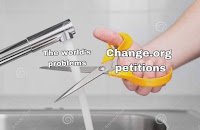 P9. Boots-on-the-ground protesting is more effective than clicktivism as it adds the dimension of clarifying to politicians that the protesters are politically engaged and willing to act, thus more likely to vote. (And rallies have worked in the past.)


